Define the meal before choosing equipment
A hot dog station may be the main lunch, a late-evening snack or one option at a fair. Start by deciding which role it plays. Guests who have already eaten may choose differently from people arriving hungry at lunchtime. Children, adults, volunteers and staff may also need different planning allowances. Record the groups you expect and the serving arrangement you intend rather than relying on a single headcount.
Write a short menu that includes the hot dog options, buns and accompaniments. Keep the first plan manageable. Several sausage varieties, multiple bun types and made-to-order toppings can turn a simple station into a much more demanding operation. If dietary needs require separate preparation, address that explicitly before selecting the equipment or promising that every option can be handled in one unit.
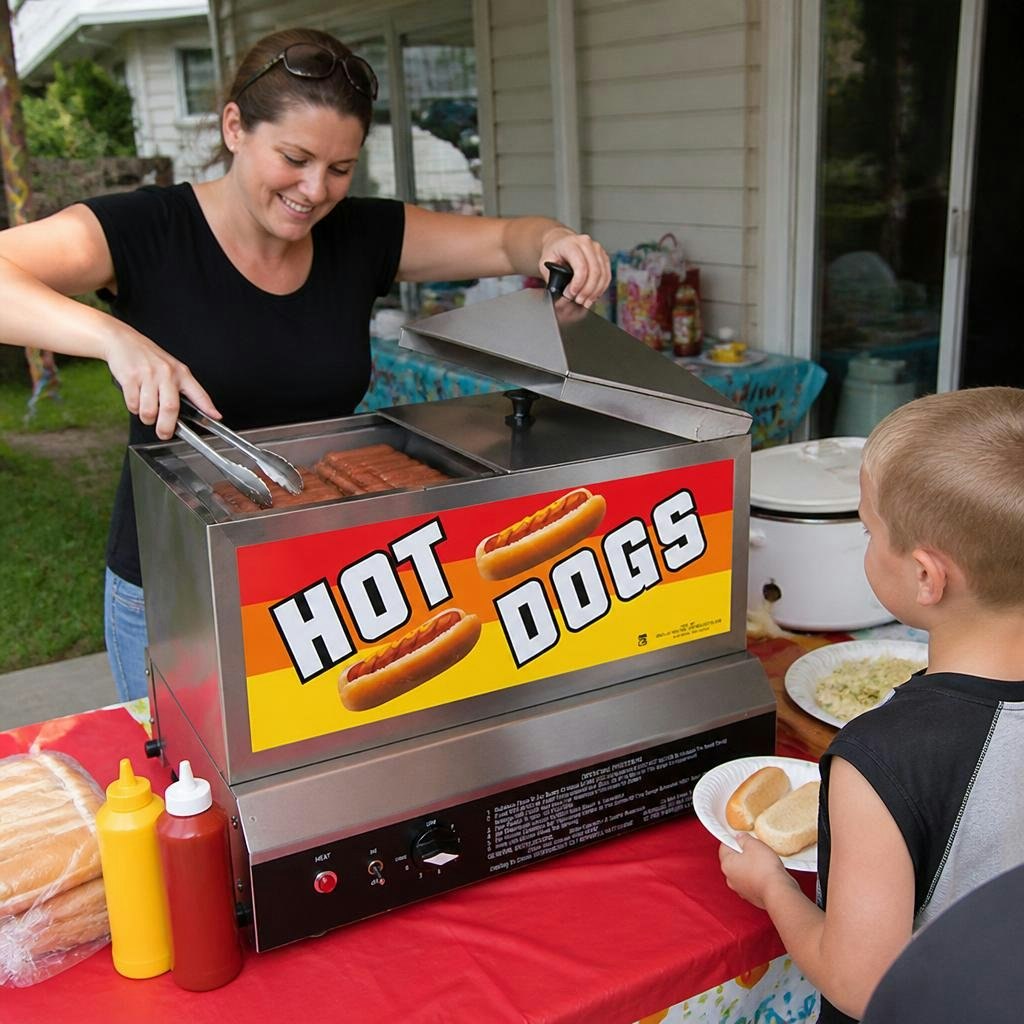
The hot dog steamer in Cody's catalogue is a starting point for planning. Confirm the model, capacity, power requirements and intended use with the rental team. Its catalogue name does not establish a universal cooking time or show exactly which foods can be prepared in it. Match the equipment to the menu, not the other way around.
Estimate portions and buns together
Begin with a realistic portion assumption for your particular audience. For example, an eighty-person lunch might be planned around an average of one and a half hot dogs per guest, producing a working estimate of 120 portions. That is an illustration of the arithmetic, not a promise that every crowd will consume the same amount. Adjust the estimate for other food, event length and any pre-orders or RSVP information.
Count buns alongside the main food, then consider packaging, napkins and condiments. A complete portion needs more than the hot dog itself. Keep any extra allowance visible on the worksheet so the organiser can decide whether the cost and likely demand justify it. If you are offering two varieties, allocate the total between them rather than ordering a full event's quantity of each.
Check package sizes before buying. The number of buns in a retail pack may not match the number of hot dogs, and special dietary options may come in different quantities. A simple shopping table prevents an apparently small mismatch from multiplying across a large event. Label the estimate clearly and revise it when attendance changes instead of assuming the first calculation remains accurate.
Separate total quantity from peak demand
The total number of portions tells you how much food to plan. The busiest serving interval tells you how quickly the station must work. A hundred portions over a three-hour fair is a different task from a hundred portions immediately after a school performance. Discuss that peak with the rental team when asking whether a steamer and your staffing plan are suitable.
Avoid calculating capacity solely from how many items can physically fit inside the equipment. The supplied instructions determine loading, water use and operation, while practical service includes checking food, handling buns and replenishing supplies. Overloading to shorten the queue can undermine the intended operation. Ask for realistic guidance for the particular model and food rather than borrowing an output claim from a different appliance.
If demand is concentrated, consider whether arrival or collection can be staggered. A token system, class-by-class service or two separate condiment points may help the line move without changing the cooking equipment. Identify the actual bottleneck first. If the delay comes from guests choosing toppings, adding another steamer may do little to improve the overall experience.
Confirm the steamer and its operating requirements
Ask which steamer will be supplied and which instructions apply to it. Confirm the permitted foods, usable capacity, power needs, water requirements and the method for monitoring operation. Do not assume a steamer is simply a hot box that can be loaded with any amount of food and left alone. The operator needs to understand the actual unit before guests arrive.
Check what comes with the rental. Serving tools, containers, bun arrangements and other accessories should be listed explicitly rather than inferred from an image. If the unit has separate spaces for different tasks, use them only as directed. Do not adapt the machine with improvised trays, foil barriers or other parts to create a feature it was not designed to provide.
Plan a short equipment briefing at pickup or delivery and make the supplied instructions available to the designated operator. If controls, cords or components appear damaged, contact the supplier rather than proceeding because the event is about to start. Keep the support contact with the station plan. Clear preparation is more effective than trying to learn unfamiliar equipment while a line of hungry guests is waiting.
Lay out four distinct stages
Think of the station in four stages: food preparation, bun assembly, guest collection and condiments. They can be close enough to work efficiently without occupying the same patch of table. Keep the hot equipment behind the serving boundary, where guests cannot reach into it. Place finished portions at a clear handoff point and let people move away before choosing toppings.
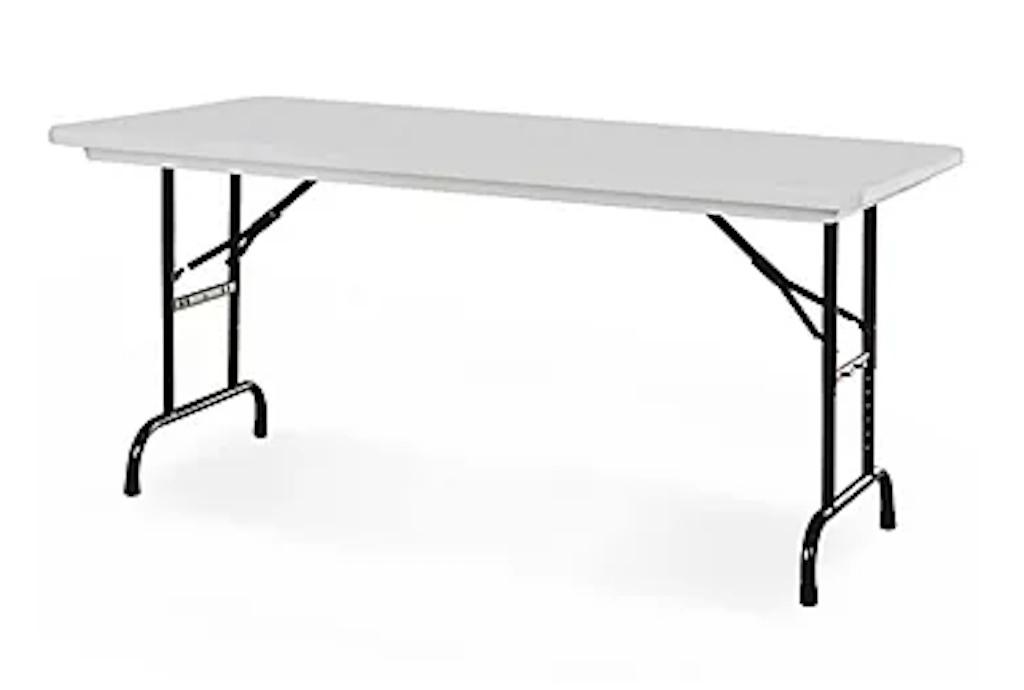
A six-foot rectangular rental table can help create a service surface, subject to confirming its suitability for the equipment and layout. You may need a separate table for condiments or supplies depending on attendance. Test the footprint on paper or with measurements before deciding one table will hold everything. A table full of equipment leaves no safe working space just because the items technically fit.
Keep the operator's replenishment route separate from the guest queue. Someone bringing buns or removing waste should not have to squeeze between people collecting food. Put signs where guests can read them while waiting. A small amount of planning here often saves more time than asking volunteers to work faster once the event is underway.
Plan buns, toppings and clean utensils
Buns need a clean, protected place and a clear method of distribution. Decide whether the serving team assembles each portion or guests receive the pieces separately. The choice affects speed, handling and the number of people needed. Keep spare stock organised by type and make it easy for a helper to refill the working area without opening several packages at once.
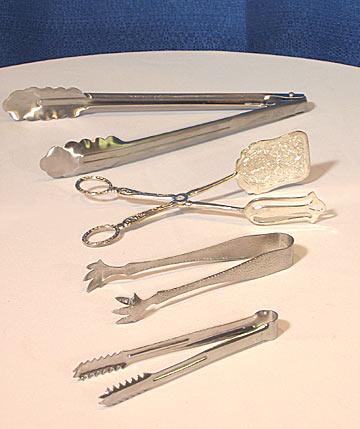
Use suitable clean utensils, such as the listed stainless serving tongs, where appropriate for the task. Confirm suitability and quantities rather than expecting one tool to move between every job. Have replacements available if a utensil is dropped or becomes contaminated. Keep tools used for different foods or preparation stages distinct, especially where dietary needs require careful separation.
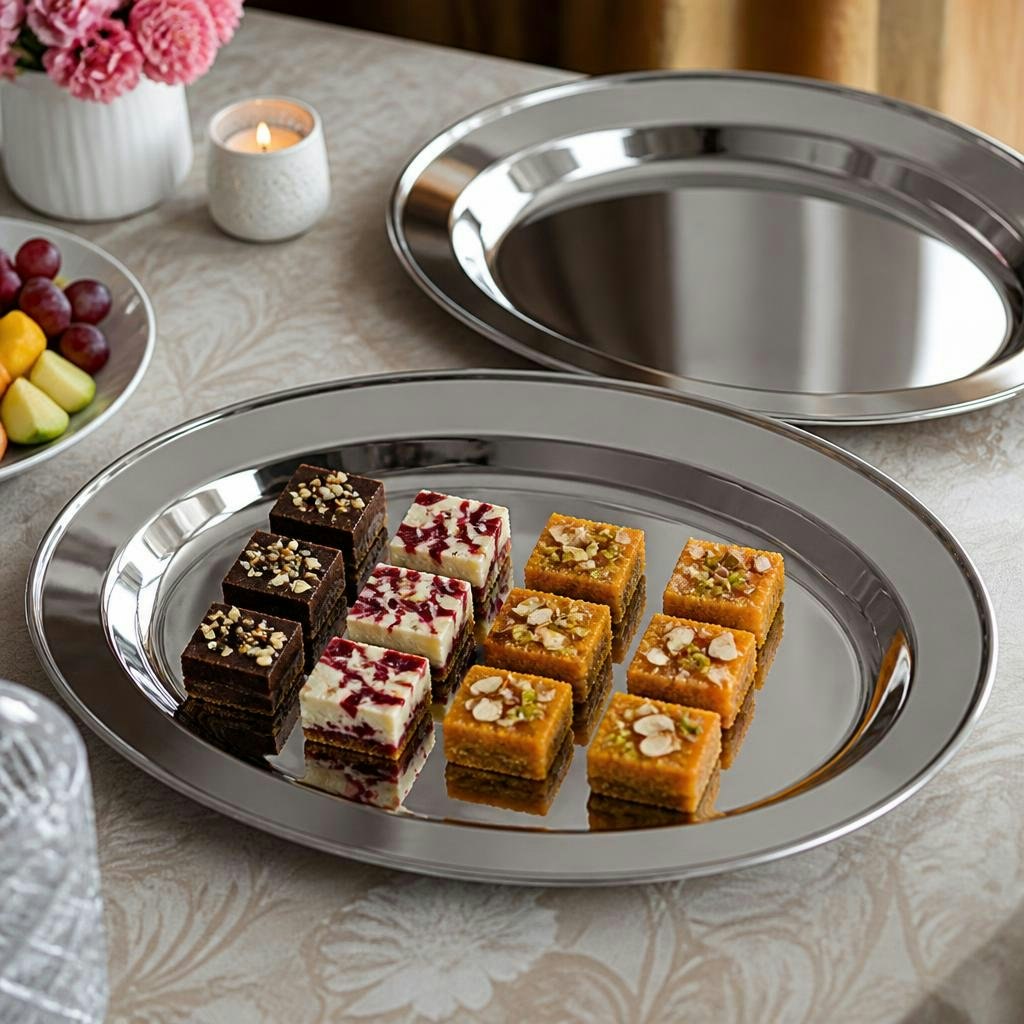
Move condiments beyond the collection point so guests can take their time without blocking the main line. Use the products' storage directions and keep ingredient information available. Do not assume that sauces, buns or alternative hot dogs have the same allergen profile. A stainless serving platter may help organise ready-to-serve items where appropriate, but it is not a temperature-controlled holding system.
Keep storage and temperature control in the plan
Arrange suitable cold storage until food is ready to be prepared, and monitor holding conditions during service. Health Canada advises cold holding at 4°C or below and hot holding at 60°C or above. Those are holding temperatures, not a substitute for the safe cooking or reheating requirements for the particular product. Use a food thermometer and the applicable food guidance rather than relying on steam, appearance or a guessed time.
Check whether the food purchased is fully cooked or requires cooking, and follow its instructions along with the steamer's permitted use. Do not treat every sausage or plant-based alternative as interchangeable. Keep packaging available so the operator can confirm what is being served and how it should be handled. Separate clean utensils and ready-to-eat food from anything that could contaminate them.
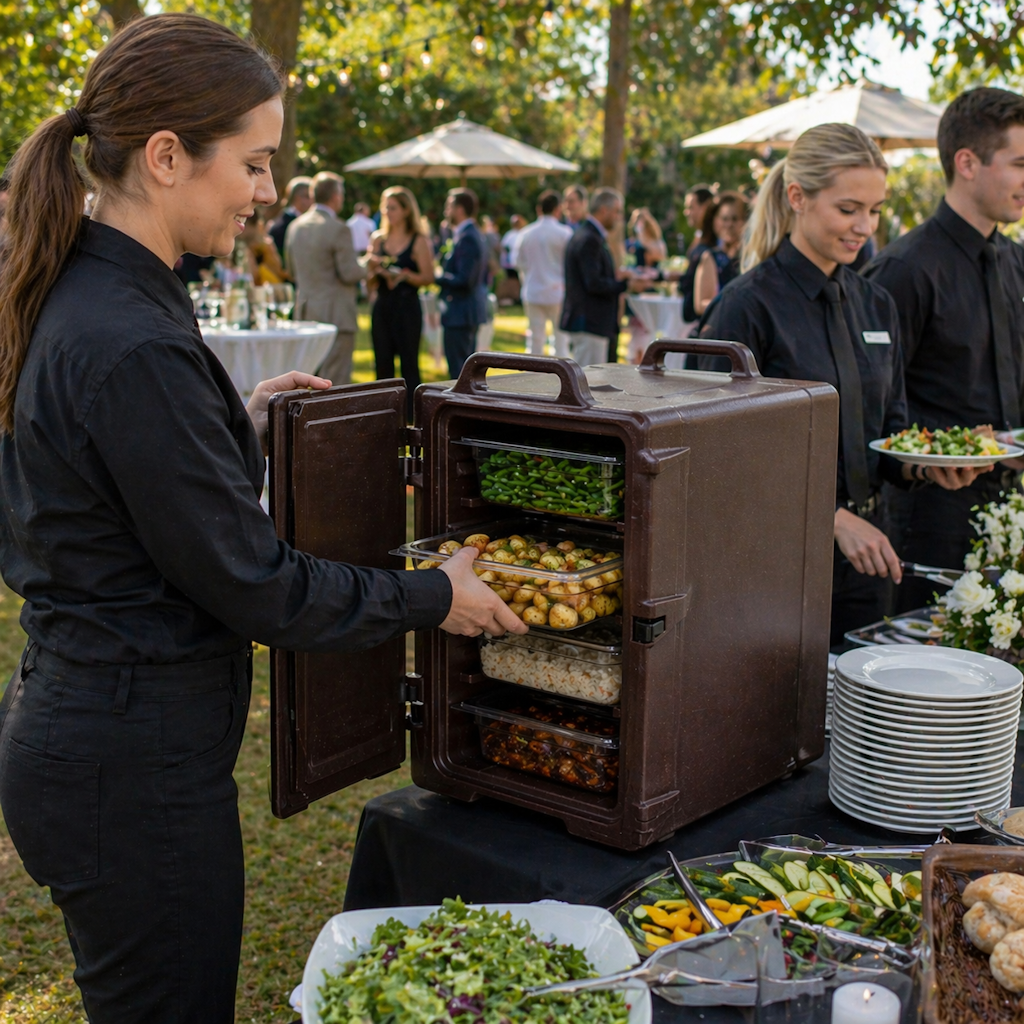
If transporting prepared food is part of the plan, discuss a suitable monitored arrangement with the person responsible for food safety. A listed food thermos may be an item to explore, but its name does not guarantee safe holding for an unspecified time. Confirm suitability, capacity and procedures; do not substitute an insulated container for a complete temperature-control plan.
Check the venue, power and public-event requirements
Have the venue confirm a suitable supply for the actual steamer. An accessible socket may share a circuit with other appliances, so list the equipment that will operate nearby. Ask about permitted cables and keep connections away from spills and guest traffic. Do not plug several heating appliances into a convenient power bar without confirming the arrangement is suitable.
Choose a dry, stable location appropriate for the equipment. Outdoor events need a reviewed plan for weather and electrical conditions, not just a tent placed over a table. Keep the serving station clear of exits and provide a workable route for guests using mobility aids. If the proposed location cannot meet the machine's requirements, relocate the station before the event rather than improvising during service.
For a fundraiser or public food event, contact Ottawa Public Health and the venue early about the requirements that apply. The organiser may need to address food preparation, facilities and supervision beyond the rental itself. A rental request confirms neither event approval nor food-service compliance. Build the equipment order around the confirmed event plan so late requirements do not force a rushed change of layout or menu.
Assign a team and a clear service method
Give each helper a defined job. One person can oversee the equipment and food checks, another can assemble portions, and another can manage payment, tokens or the queue where needed. Smaller events may combine roles, but avoid expecting the operator to leave hot equipment repeatedly to fetch supplies or collect money. The team should understand who makes decisions if demand changes.
Before opening, walk through one complete order. Where does the guest queue? Who takes the token? Who serves the portion? Where does the guest add condiments and dispose of packaging? This short rehearsal can expose a missing utensil or an awkward handoff before it creates a long line. Keep the menu and portion policy visible so volunteers do not have to negotiate each order.
Plan breaks and handovers for longer events. The incoming operator needs to know the food status, remaining supplies and equipment instructions. Use a written count or checklist rather than “there is probably enough.” A well-organised volunteer station should be understandable to the next helper without requiring them to reconstruct the whole plan from scattered boxes and half-open packages.
Use a worked example to finish the order
Imagine an eighty-person staff lunch with an estimated 120 portions and a forty-five-minute serving period. The first question is whether most people arrive at the start or in smaller groups. Next, confirm the food options and any separate preparation needs. Ask about a suitable steamer arrangement for the actual peak, then compare that with the number of helpers available.
Suppose the group will arrive in two waves. You may be able to simplify the serving process by preparing for each wave deliberately, keeping the appropriate storage and food-safety controls in place. Set up the condiment area beyond the handoff and assign one helper to replenish buns and napkins. This approach addresses the complete service flow rather than expecting the machine alone to solve every delay.
The resulting rental list may include the steamer, suitable tables and serving utensils, with any additional holding equipment reviewed for its specific purpose. Food, buns, packaging and condiments remain separate planning lines unless expressly supplied. Confirm the order against the final guest estimate and menu. The example shows how timing, people and supporting pieces turn a headcount into a practical request.
Close service and prepare everything for return
Set a final serving time and avoid starting a process that cannot be completed before the planned close. Handle leftover food according to the applicable food-safety guidance rather than assuming it can all be saved. Keep the station supervised while equipment remains hot, and follow the supplied directions for shutdown, cooling, draining and cleaning. Do not move or pack the unit simply because the guests have left.
Confirm the return condition expected by Cody before the event, and allow time to meet it. Count detachable parts, utensils and other rental pieces before loading. Keep electrical components dry and do not immerse or dismantle the machine unless its instructions expressly direct an approved operator procedure. Report equipment problems clearly so they can be addressed properly.
When requesting the rental, provide the event date, guest estimate, menu, serving period, location and pickup or delivery preference. Ask for the model, accessories and availability to be confirmed. After the event, record the actual portions served and the busiest interval. Those simple observations will make your next hot dog station easier to size and help avoid both unnecessary stock and an unexpectedly long queue.
Further reading & sources
Check current instructions and requirements for your event and the equipment supplied.