Decide what role popcorn will play
Popcorn can be the main snack, a welcome treat or one choice among several food stations. Make that decision before estimating quantities. At a movie night, guests may expect a portion at the start and another later. At a school fair, some visitors will choose a different snack. A corporate reception might offer small portions simply to encourage people to mingle. Each situation creates a different production and serving pattern.
Write down the attendance estimate, the opening and closing times of the station and whether portions will be free or sold. If payment is involved, plan where it happens so the machine operator does not have to alternate constantly between food handling and cash. Keep the guest-facing activity simple enough that a new helper can understand it quickly.
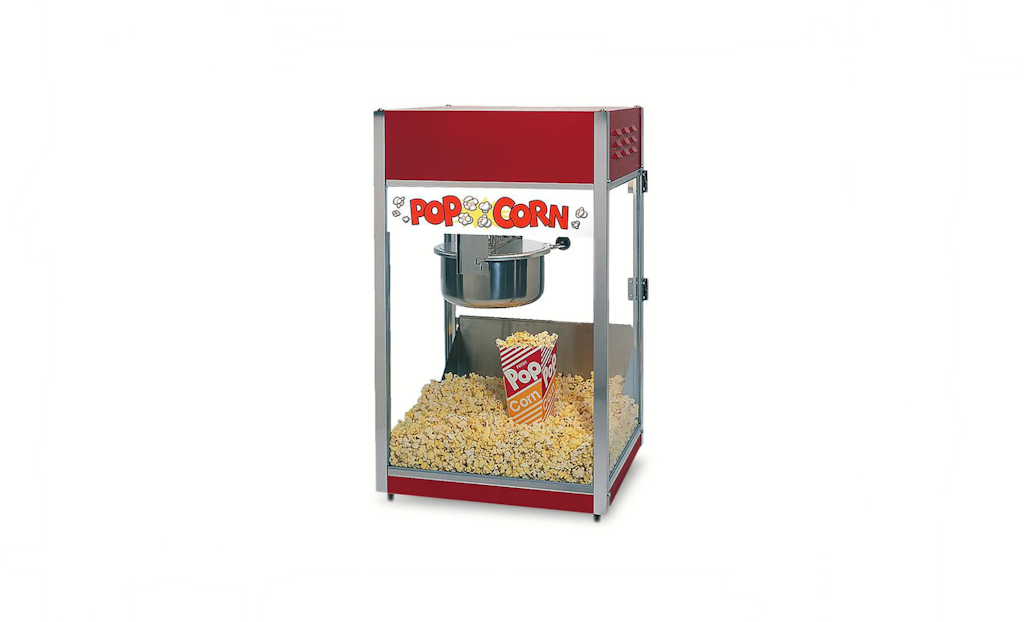
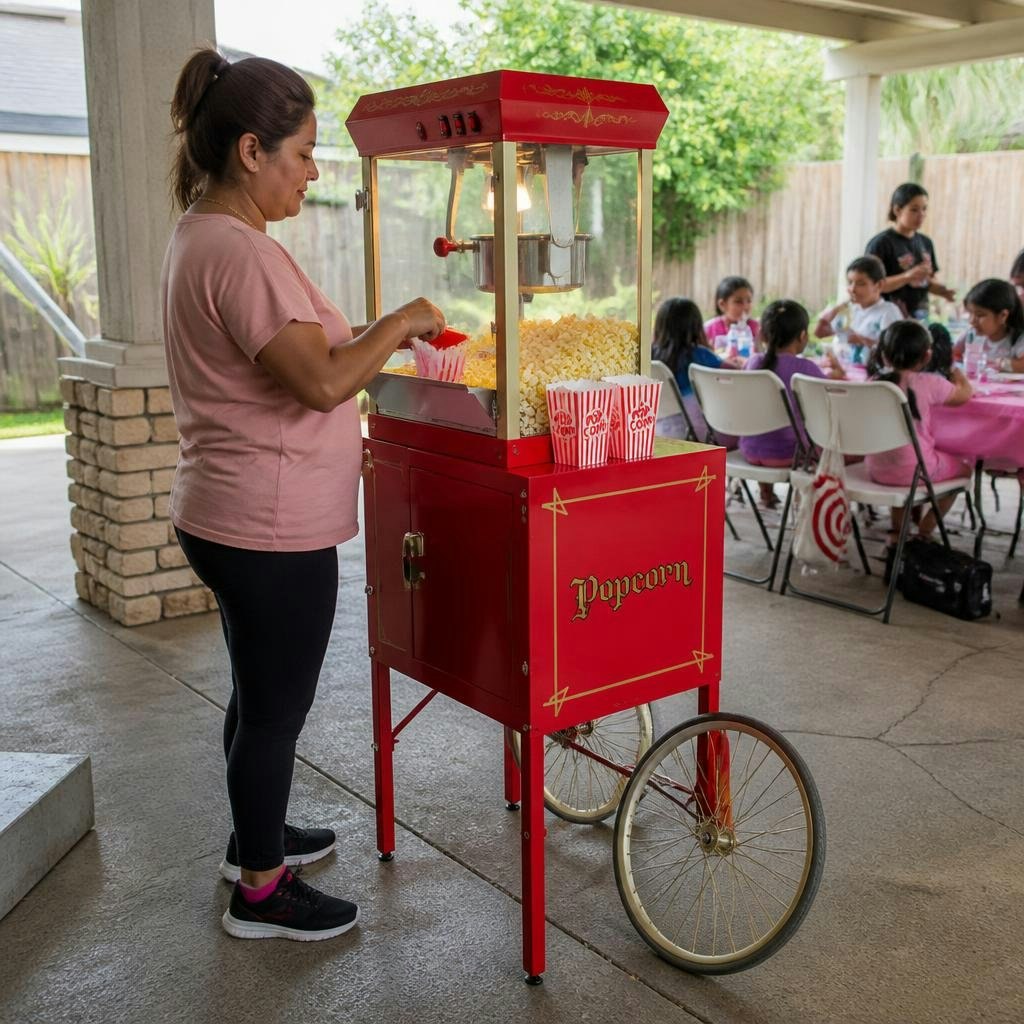
The tabletop popcorn machine in Cody's catalogue is listed without a cart. That wording matters when planning the station. Do not assume the picture includes every accessory in the rental. Decide whether you need a suitable table or want to discuss the separately listed cart, then confirm the complete arrangement in your request.
Estimate servings and choose a consistent portion
Start with likely servings rather than the total number of people invited. For a sixty-person film evening, you might plan sixty first servings plus an allowance for refills based on your own audience. If you choose an illustrative twenty extra portions, the working total becomes eighty. That is a planning example, not a universal recommendation for how much popcorn each guest will eat.
Choose the serving container before translating that count into ingredients. A small paper bag and a large tub are not the same portion. Fill a sample container to the level you intend to serve, then ask for the appropriate ingredient quantity for the supplied machine and that number of portions. Do not assume a packet's advertised servings match a much larger container you have purchased separately.
Keep a record of the assumption: eighty containers of a stated size. This lets you revise the order sensibly if attendance rises or another snack is added. Set aside extra empty containers if you want flexibility, but do not confuse those spare containers with a need to cook every possible portion immediately. Fresh production and manageable batches are easier to control than a large, uncertain surplus.
Confirm ingredients and the supplied machine
Ask which kernels, oil, seasoning and portion packs are appropriate for the actual machine. The catalogue identifies the rental machine, but its name alone does not establish kettle capacity, batch measurements or operating sequence. Use the instructions supplied for that unit. Do not copy a recipe or heat setting from a different popper found online, even when the machines look similar.
Make a separate list of consumables and accessories: ingredients, serving bags or boxes, a suitable scoop, napkins and any approved handling items. Ask which are available, which are included and which you must obtain elsewhere. Keep unopened ingredients in their original packaging so helpers can check quantities and guests can review ingredients if needed. Avoid promising that all popcorn is suitable for every allergy or dietary preference.
If you want flavoured popcorn, discuss it before booking. A standard kettle may not be intended for added sugar, sauces or speciality coatings. Adding an ingredient because it sounds appealing can create a cleaning or equipment problem. A clear plan for ordinary popcorn is better than an ambitious menu that depends on using the machine outside its intended purpose.
Choose a table or cart deliberately
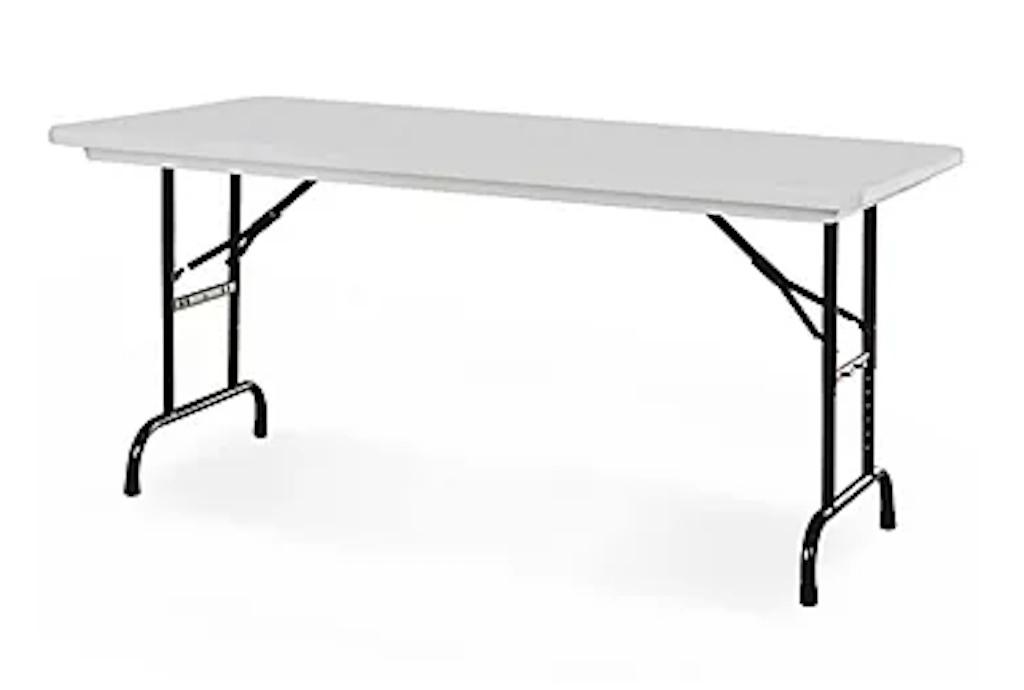
A six-foot rectangular table can provide a work surface and room for supplies, provided its suitability for the machine is confirmed. Check the machine's footprint, loaded weight and clearance requirements before deciding how much else can share the table. The machine should sit securely rather than overhang an edge or rest on a makeshift platform. Do not use boxes or an unstable folding surface to raise it for display.
The separately listed antique popcorn cart may be worth discussing if presentation is important. Confirm that the cart and the machine you are requesting are compatible, how they are secured and whether any additional pieces are required. A decorative cart is not a reason to move hot equipment through a crowd. Plan where the station will remain during operation.
Keep the immediate work area uncluttered. Ingredient stock and empty boxes do not need to be displayed beside the kettle. Place guest containers where they can be reached without leaning into the machine's operating space. If you use a table covering, ensure it cannot be pulled or caught by passing guests and does not interfere with the supplied equipment clearances.
Set up a guest flow that protects the operator
Think of the station as two sides: the working side and the guest side. The operator needs room to prepare batches and handle hot components according to the machine instructions. Guests need a clear place to collect their portions. Mark the handoff point with a simple sign and avoid inviting children to reach into the machine or gather around the operator's hands.
At a busy event, a second helper can portion finished popcorn and manage the queue while the operator concentrates on the machine. Payment or ticket collection can happen at the end of the line or at a separate table. The aim is to avoid crossing clean serving tools, money and hot equipment in one cramped area. Keep a waste bin nearby without placing it where people stop in the exit path.
Allow room for guests using mobility aids and for families waiting together. A popcorn queue should not block a doorway or merge with the line for another attraction. Draw the approach and departure routes on the event plan. If the station sits beside a movie screen, consider how people can collect a snack without walking repeatedly through seated guests' view.
Check power and the location before event day
Confirm the electrical requirements of the supplied machine with Cody and the venue. An outlet near the proposed station is only useful if the circuit can support the equipment and any other connected loads. Ask about the permitted cord arrangement and avoid assuming a power bar can safely accommodate several heating appliances. Make sure the event team knows which supply has been allocated to the machine.
Plan the station in a dry, suitable setting. An outdoor event may need a different arrangement from an indoor party, and a canopy does not automatically make an electrical machine suitable for damp conditions. Protect the guest route from cords and keep connections out of spill areas. If the venue cannot support the proposed setup, change the location before the rental is collected.
Check access as well as power. Measure narrow doors, stairs or vehicle openings where necessary, and confirm how the equipment can be moved safely while cool. Leave enough time to place the station before decorating or arranging guest furniture. It is much easier to adjust an empty room than to carry a machine through a finished party setup.
Schedule production around actual demand
Ask about a realistic production rate for the machine supplied, then compare it with the busiest period you expect. Do not assume one machine can serve every guest at the same moment simply because the total attendance seems modest. A film starting at seven creates a short rush immediately beforehand; an open house offers a much wider window for the same number of portions.
For the sixty-person movie example, decide whether snacks will be available during arrival, at the start or at a scheduled break. Opening the station early can spread demand, but you still need to follow the appropriate production and holding instructions. Avoid filling the cabinet far beyond the plan just to create a visually impressive display. Ask about the suitable handling of finished popcorn rather than guessing how long quality will remain acceptable.
Make the schedule visible to helpers. Include setup, the first planned batch, peak collection, the final batch and closing. Stop producing when the remaining demand no longer justifies another batch. A simple count of containers used and guests still waiting can be more helpful than judging demand from how full the machine looks.
Prepare an operator and a backup helper
Choose an adult who can stay with the machine and follow its supplied instructions. A familiar snack does not make the equipment a children's activity. Give the operator time to review the correct controls, batch process and safe handling before guests arrive. Ask questions during collection or delivery, when the supplier can explain the actual unit, rather than relying on a hurried phone call during the rush.
Have a backup helper who understands where supplies are kept and how the station is organised. That person does not need to invent repairs if something goes wrong. If the equipment behaves unexpectedly, stop using it as appropriate and contact the supplier. Do not open electrical housings, force moving parts or continue operation because guests are waiting.
A short station card can list the planned portion size, ingredient location, collection point, responsible operator and supplier contact. Keep model-specific instructions separately with the machine. This division makes the event workflow easy to read while preserving the correct equipment guidance. If volunteers change halfway through, use a direct handover rather than assuming the next person has used the same model before.
Handle ingredients and hot equipment carefully
Keep ingredients protected from contamination and use clean serving utensils. Retain packaging for ingredient checks, especially if oils or flavourings differ between batches. If a guest reports an allergy, provide the available product information and explain your handling setup honestly. Do not claim a machine is allergen-free because the basic ingredient is corn.
The kettle and nearby parts can remain hot after a batch finishes. Follow the supplied instructions for shutdown, cooling and cleaning, and keep guests away from the working area throughout. Gold Medal's manufacturer guidance stresses cooling before cleaning and warns against using water or ice to rapidly cool a hot kettle. This general warning is useful, but the particular rental unit's instructions determine the exact procedure and permitted cleaning products.
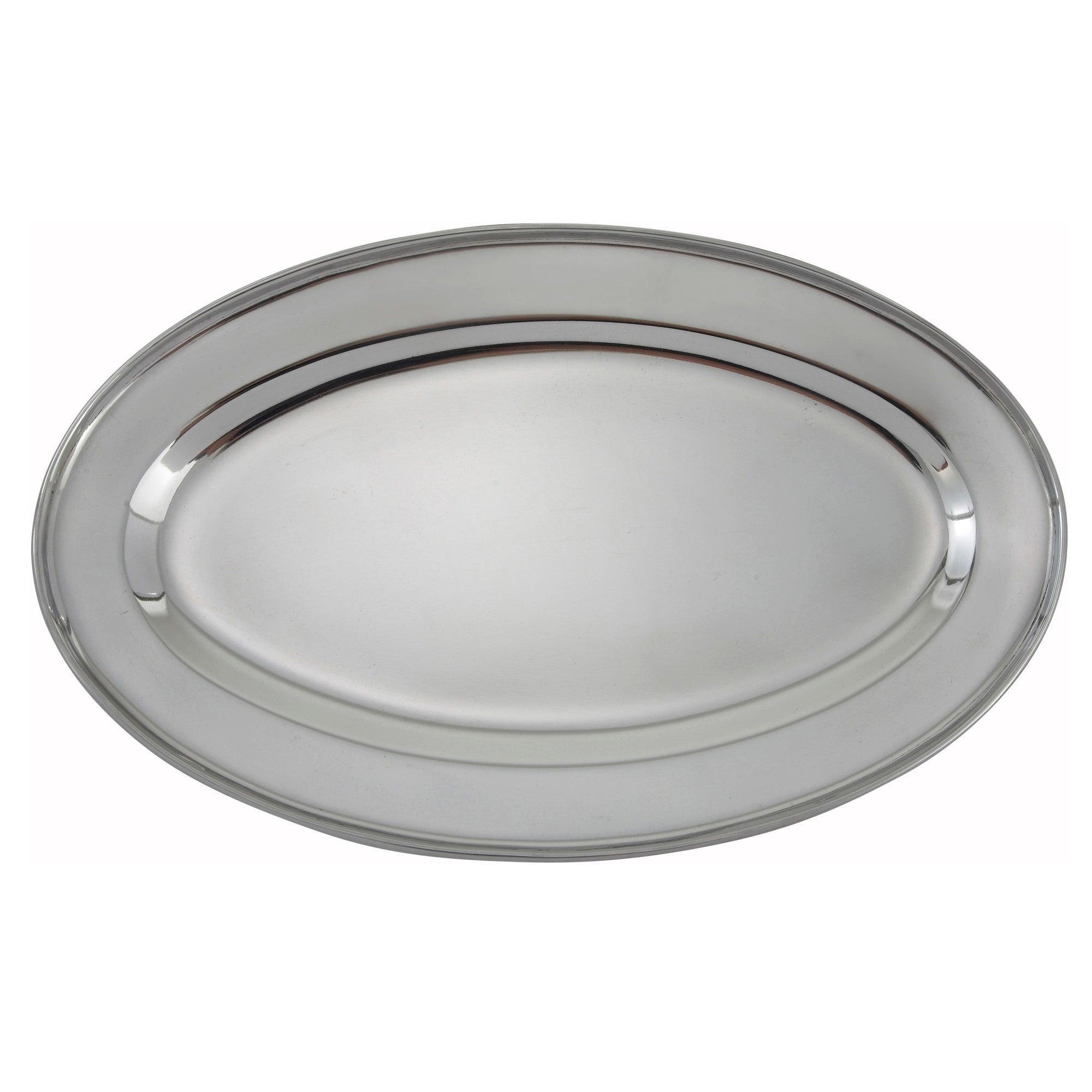
Do not immerse electrical components or improvise a deep-cleaning method. Confirm the return expectations with Cody before the event. A stainless serving platter may be useful elsewhere on the snack table if appropriate for the food you serve, but it is not a substitute for a machine component or an approved heat-resistant surface. Keep ordinary serving pieces separate from the machine's operating parts.
For a ticketed film night, coordinate the snack station with admission. Guests holding coats, tickets and drinks may struggle to carry a large popcorn container at the same time. You could place collection after ticket checking, with enough space to step aside before entering the seating area. If portions are included with admission, tell the serving helper how that entitlement will be recognised; an agreed token or mark is simpler than asking the operator to remember faces. Keep any additional sales distinct from the included portion so volunteers can explain the arrangement consistently. This small service decision affects the number of containers needed, the position of the queue and the time available to produce the first round. Settle it before ordering supplies rather than discovering the conflict as the film is about to begin.
Close, count and improve the next event
Plan a closing time that leaves enough time for cooling and packing. The final batch should not be started just as the vehicle arrives to collect equipment. Once service ends, keep the area controlled while hot parts cool according to instructions. Gather scoops, detachable pieces and cords with the correct rental items, and check that nothing has been left in a supply box or carried to another station.
Count unopened supplies and record how many portions were actually served. Note whether the queue peaked at arrival, during a break or near closing. Those observations are more useful for a future event than a vague impression that you “needed more popcorn.” You may discover that the total quantity was right but the serving window was too narrow, or that smaller containers would have suited the audience better.
When sending the rental request, include the date, setting, guest estimate, service window and whether you want a table or cart arrangement. Ask about the specific machine, compatible supplies and availability. That gives Cody the information needed to review a complete station, while helping you avoid missing pieces that only become obvious once guests are waiting for their first bag.
Further reading & sources
Check current instructions and requirements for your event and the equipment supplied.