Turn the guest list into a seating plan
Write down everyone expected for the meal, including children who need their own place. Separate confirmed guests from possible additions and choose a date to finalize the count. Holiday invitations often evolve through family conversations, so one shared list is more dependable than several text messages. Ask about access and seating needs early, before deciding where the extra table will go.
Decide whether you want one long gathering, two nearby tables or separate rooms. The right choice depends on your home and the group. A second table can work beautifully when guests remain connected, but placing a few people out of sight may feel like an afterthought. Consider the conversation as well as the count, especially if some guests do not know one another well.
Make a named seating draft even if you will not use place cards. It exposes awkward gaps, such as a child who needs help being seated far from their caregiver. It also lets you see whether a comfortable route remains for a guest who needs more room. Do not plan to solve these questions by adding a chair at the last minute; that chair still needs a usable place at a table.
Measure the room with chairs occupied
Measure the room or combined area where you hope to serve dinner. Include door swings, cabinets, radiators, stairs and furniture you will keep in place. The free floor area is usually smaller than the room's overall dimensions. Mark the paths to the kitchen, washroom and exit, and keep those routes available rather than treating them as extra seating space.
Use tape on the floor or a scaled drawing to represent the proposed table footprints. Then add chairs as they will be used, with people sitting and getting up. Test the route from kitchen to table with a tray-sized object. If someone has to stand whenever a platter passes, a tighter seat count may not be worth the inconvenience. Guests should not have to squeeze behind a hot serving dish to leave their seats.
A measurement exercise may show that two smaller tables work better than one large extension. It may also show that a buffet table belongs in another area. Avoid assuming rental furniture can be forced into a room because it folds for transport. Confirm the setup dimensions, and ask for options when the first arrangement does not leave enough comfortable space. Layout should determine the rental list.
Combine rental and household tables thoughtfully
If you are extending your dining table, measure its height, width and end shape. A rental table that is several inches narrower or taller can create an awkward joint and a less comfortable seat. Cloths can coordinate the appearance, but they cannot correct an unstable connection or an inconvenient height change. Treat each table as an independent piece unless the rental team provides a specific approved arrangement.
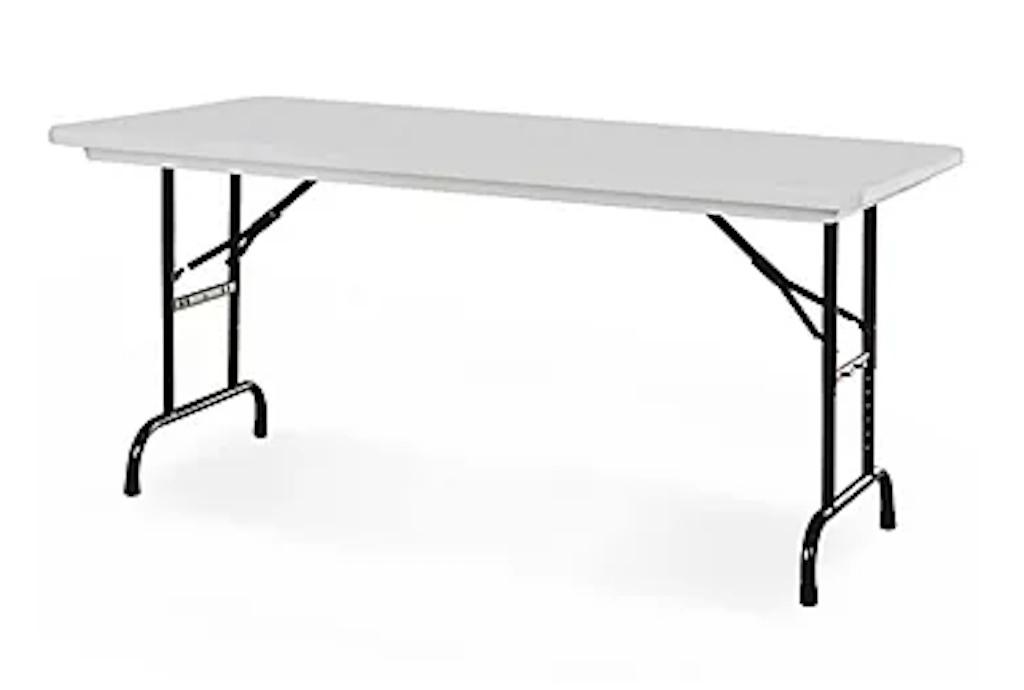
Look at a six-foot rectangular rental table as one possible addition, then compare its dimensions with the room and existing furniture. Do not assume a household table described as six-foot has the same measurements. If you prefer a separate group table, a 60-inch round table may suit the room better, provided there is enough space around it for occupied chairs and circulation.
Plan the place settings where tables meet. A leg, frame or table joint can turn a seemingly available position into an uncomfortable seat. Ask about the under-table structure when it affects your layout. For a family-style meal with several platters on the table, allow generous surface space rather than counting only how many chairs touch the edge. A little flexibility in the arrangement can make the dinner feel much calmer.
Choose chairs people can enjoy sitting in
Holiday meals can last longer than expected. Guests may remain seated through several courses, conversation and games, so consider comfort as well as appearance. Check chair suitability, seat height and how the chair fits under the chosen table. A borrowed collection can work, but compare the pieces before the day rather than discovering that one person is seated much lower than everyone else.
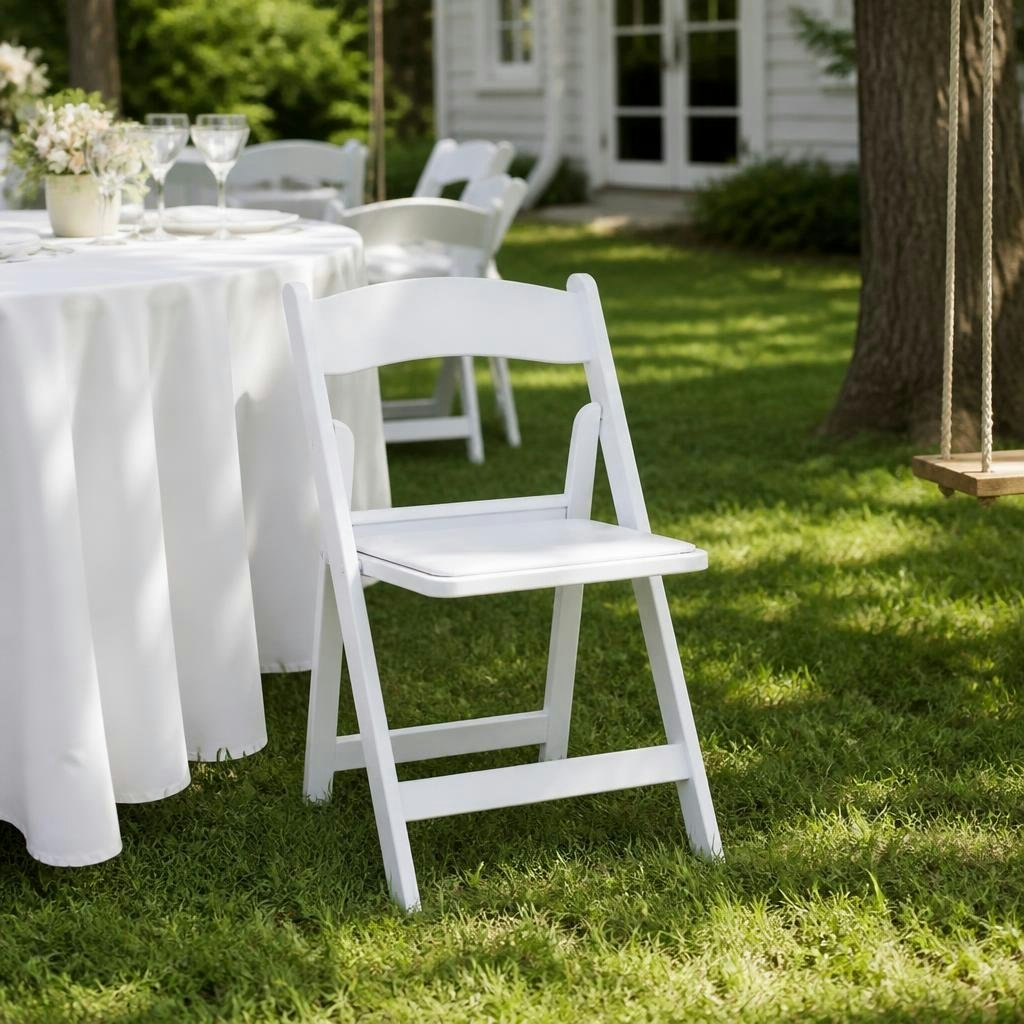
Browse resin folding chairs with cushions if you want a consistent addition to your existing seating. Ask the team about the exact model and any handling requirements. If some guests need a particular support or seating arrangement, discuss that need rather than assuming one chair style suits everyone. Keep the most accessible places on a clear route, not at the far end of a tightly packed table.
Avoid counting stools, benches and dining chairs as equal solutions without considering their users. A high stool is not a substitute for a standard dining chair at a normal-height table. Children should have appropriate seating arranged by their caregivers. If you keep spare chairs, decide where they can be placed safely and comfortably. An extra chair is useful only when it fits the layout rather than blocking an exit or service path.
Choose linens after the tables are confirmed
Record the exact dimensions of every table, including the ones you own. Decide whether you want a modest drop, a longer drop or a floor-length look, then calculate the cloth size for each table separately. A single size will not necessarily suit your dining table, a rental banquet table and a small dessert table. The linen-size guide can help with the calculations once those dimensions are known.
For a relaxed family meal, a coordinated colour across different tables can be enough to make the arrangement feel intentional. You do not need every surface to have identical styling. Keep centrepieces proportionate to the available space and consider where serving platters will sit. Long cloths should be arranged so they do not interfere with guests moving chairs or using the main routes through the room.
Try one complete setting before decorating every table. Place the plate, cutlery, napkin, glasses and a representative serving dish where they will actually go. This makes it easier to spot a centerpiece that consumes too much room. Include a separate cloth for any buffet or dessert table you intend to dress. Ordering linens from a table-by-table checklist prevents the common problem of having enough cloths in the wrong sizes.
Count tableware by course and serving style
Write your menu in the order it will be served, then assign a dish and utensil to each course. Soup, salad, the main meal and dessert may each use different pieces. If guests will keep the same plate for part of the meal, make that a deliberate service decision rather than an assumption hidden in the count. Do not depend on washing and resetting pieces mid-meal unless someone has agreed to do it properly.
For 18 guests, start with 18 dinner plates. If your chosen reserve brings the requirement to 20 and the style is ordered by the dozen, you would request 24. Calculate side plates, dessert dishes and cutlery independently. The extra dinner plates do not solve a shortage of teaspoons at coffee time. Confirm ordering increments with the rental team and keep the quantities on one checklist.
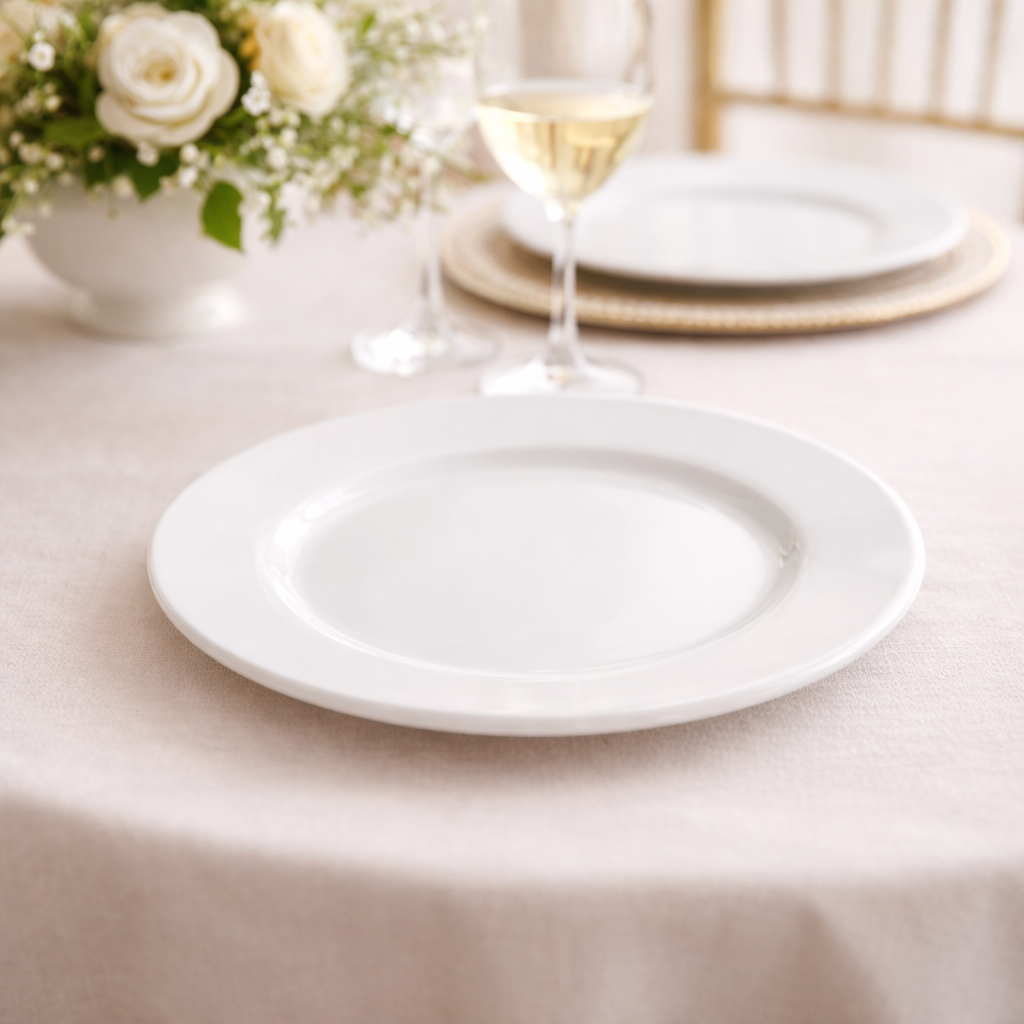
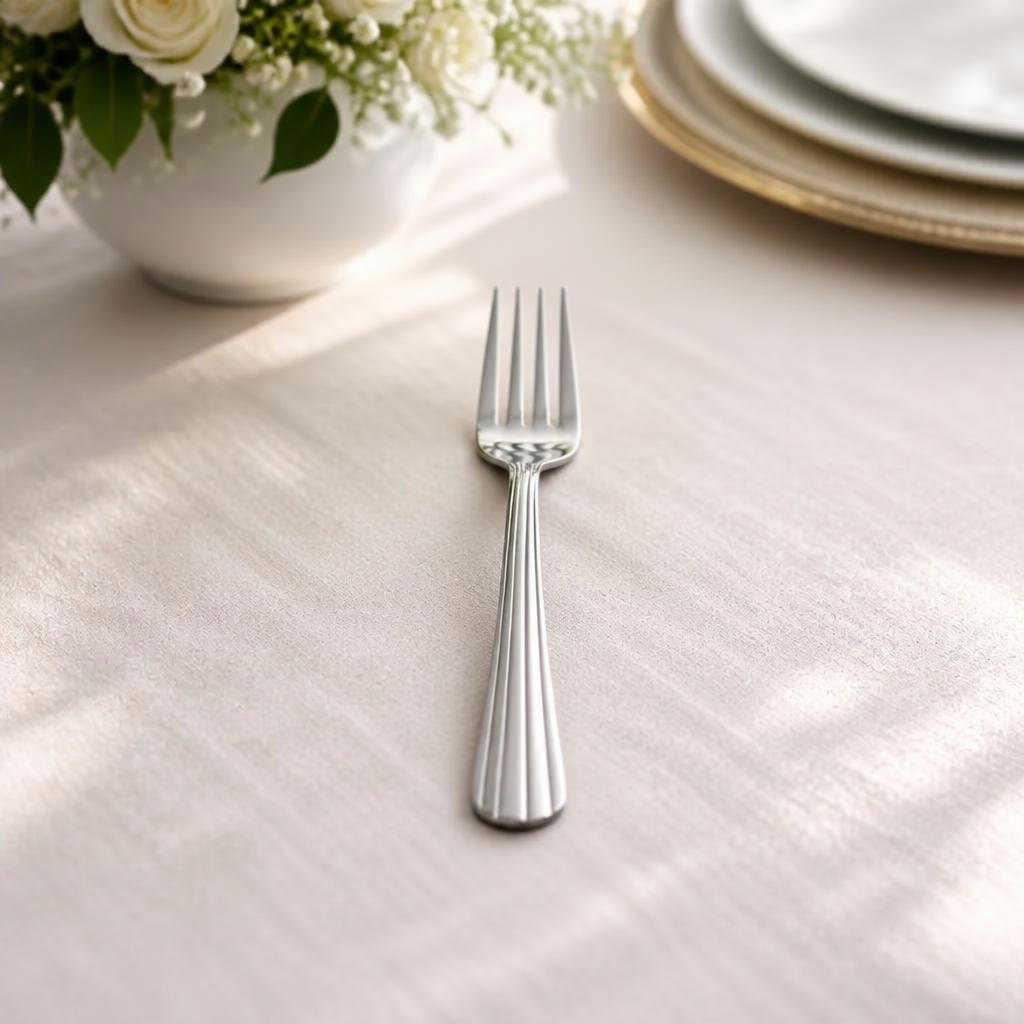
Consider Sabina dinner plates for a coordinated main-course setting, with suitable dinner forks and the other pieces your menu needs. Check the plate dimensions against your layout and portions. Large chargers, multiple glasses and family-style serving bowls all compete for space, so avoid ordering from a photograph without testing how the actual pieces fit at your table.
Give serving dishes their own working space
A holiday meal often creates more serving pieces than ordinary dinner: roasting trays, vegetable bowls, sauces, bread baskets and dessert plates. Decide what will sit on the dining table and what will remain at a buffet. Family-style service encourages sharing, but it requires enough clear tabletop space and a safe way to pass dishes. A buffet can free the dining table while creating a different circulation problem to solve.
Mark the serving sequence before placing equipment. Guests should be able to collect a plate, choose food and move toward a seat without doubling back through the queue for cutlery. Put drinks elsewhere if they would slow that flow. Leave a place for a helper to replenish dishes without reaching over people. The kitchen counter may work for some tasks, but it should not be expected to hold both cooking equipment and the entire buffet.
Ask the person preparing the meal what equipment is needed to serve it safely. Holding equipment is not a substitute for a suitable cooking and temperature-control plan. Health Canada recommends keeping cold foods at or below 4°C and hot foods at or above 60°C. Use appropriate food-handling guidance and the instructions for the exact equipment, rather than assuming a decorative serving arrangement maintains the required temperature.
Plan glasses, coffee and the clearing area
Make a drink list before deciding on glassware. Water, wine and coffee may all be offered to the same guest during the meal, but not necessarily in the same vessel. Count the drinks you plan to serve and whether glasses will remain at the setting or be replaced. Keep some clean replacements accessible for spills or a guest changing drinks, and confirm the supplier's ordering units.
Add napkins to the list explicitly. White cloth napkins provide a simple starting point, while other catalogue colours can coordinate with the room or occasion. Include the people serving the meal when planning practical supplies, and decide where extra napkins will be kept. A reserve hidden under several packed boxes will not help when someone needs it quickly.
Create a clearing area that does not interfere with food preparation. Keep used glasses secure and separate from clean pieces, and avoid precarious stacks of dishes. Decide who will clear between courses and where the rental packaging can remain protected for the return. Do not let a small sink become the only landing place for every dish. One planned surface can make the kitchen feel much larger without changing the room.
Organize the rental day and the following morning
Confirm the pickup or delivery dates, return timing and any holiday operating arrangements directly with the rental team. Do not rely on ordinary hours when planning around a holiday. Make sure the person collecting furniture has a suitable vehicle and knows the load dimensions. Ask about safe handling and transport, and protect items according to the instructions supplied rather than improvising an overloaded trip.
If you receive rentals before the meal day, store them in a clean, dry, secure location. Keep packaging and racks together so returns are straightforward. Set up tables and test the arrangement early enough to make small changes before guests arrive. Check stability and the locking mechanisms according to the instructions, and do not leave unfamiliar setup tasks until food is already coming out of the oven.
Plan the next morning as well. Give helpers a list for counting tableware and furniture, and follow the confirmed return instructions for scraping, rinsing, packing and linens. Do not assume every item has the same cleaning requirements. Record any damage or missing pieces and contact the team. A short, organized reset is easier than discovering a borrowed glass in a cupboard after the rental has already been returned.
Build a calm holiday hosting checklist
Review the plan in three passes. First, check that every guest has an appropriate place and enough space to use it. Second, check the meal course by course for plates, cutlery, glasses, napkins and serving pieces. Third, check the work around the meal: setup, food service, clearing, storage and returns. This catches more omissions than scrolling through a catalogue and adding appealing items one at a time.
Send the rental team your guest count, table dimensions, preferred style and dates. Explain which furniture you already have, where additional tables will go and whether you need pickup or delivery. Ask them to review compatibility and quantities before confirming the request. Current availability and the final quote determine the completed order; an initial list is the beginning of that conversation.
A successful holiday arrangement does not require a showroom-perfect dining room. It needs enough comfortable places, sensible service space and a manageable plan for the host. Rentals can help you welcome more people without buying and storing furniture for the rest of the year. Choose the pieces that solve the real constraints in your home, and leave enough room in the plan to enjoy the meal with your guests.
Further reading & sources
Check current instructions and requirements for your event and the equipment supplied.