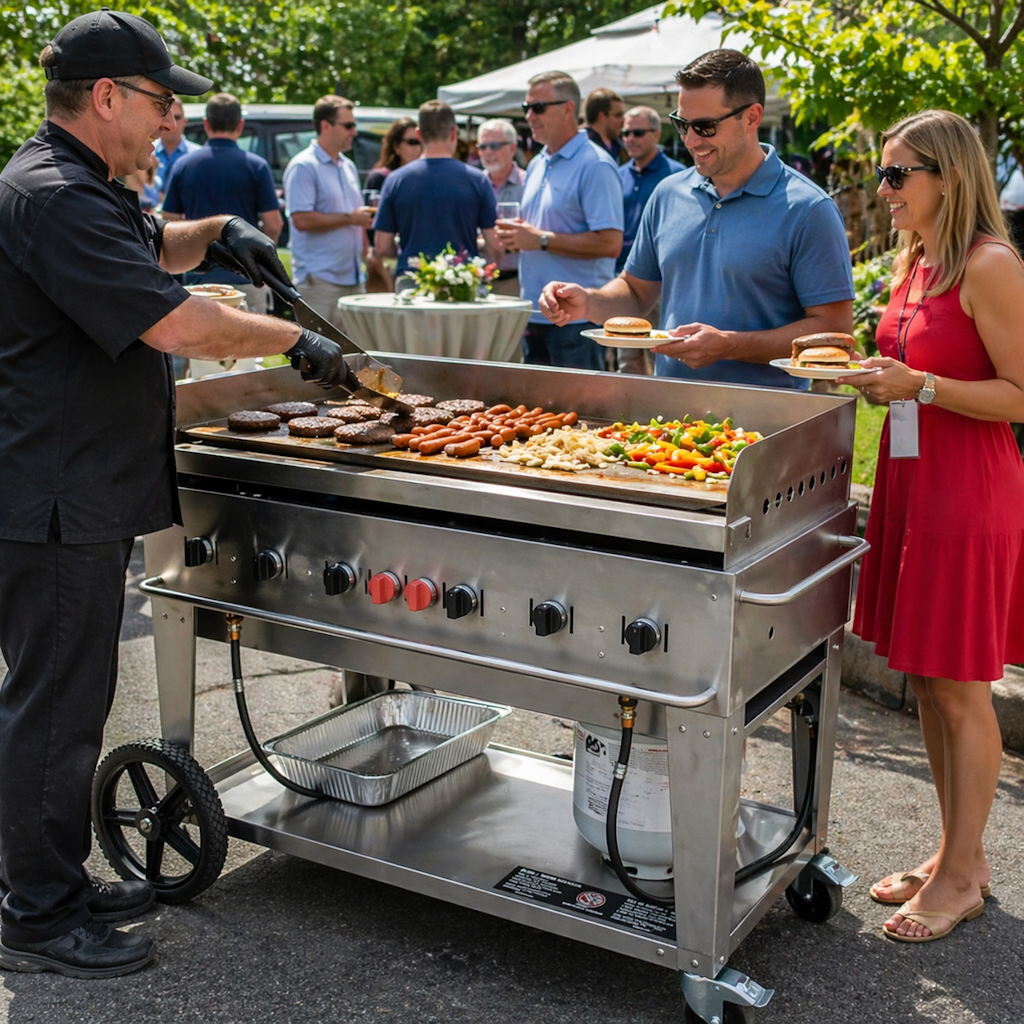
Start with what you are cooking
Before comparing barbecue sizes, write a specific menu. Burgers, hot dogs, chicken pieces, vegetable skewers and breakfast foods do not occupy or use a grill in the same way. A menu with one main item can be much easier to organise than a menu requiring several cooking methods and separate preparation areas. Count the choices you need to offer, then ask whether each adds a meaningful benefit for your guests.
Describe the food clearly to the person helping with the rental. “Chicken for one hundred” leaves important questions unanswered: whole birds, pieces, skewers or prepared portions can mean very different equipment. Include vegetarian or allergy-related requirements in the initial plan. Do not assume putting foods on opposite ends of the same surface is enough to meet every dietary need.
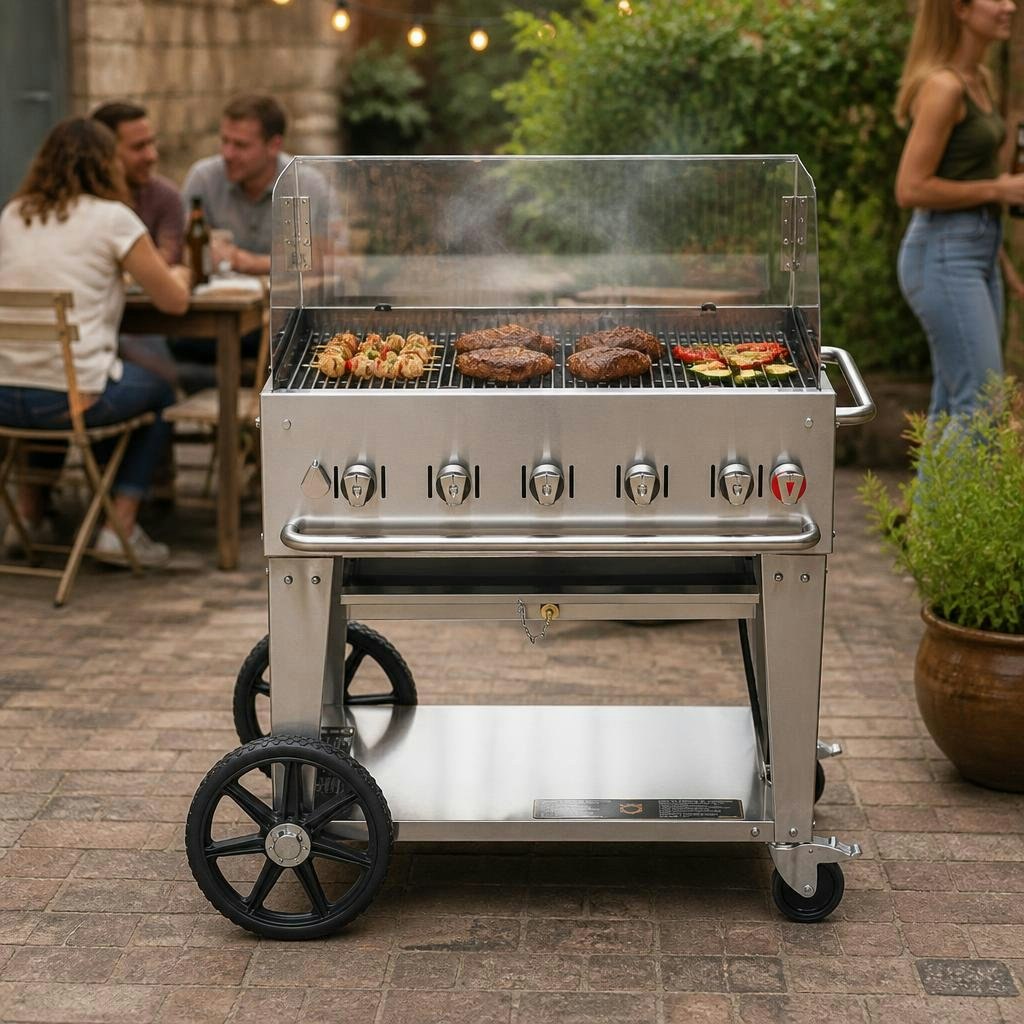
The catalogue includes a three-foot propane BBQ, a four-foot propane BBQ and a portable three-foot propane griddle. These are starting points for a discussion, not interchangeable answers to a headcount. Confirm the supplied model, usable cooking surface and suitability for your intended menu before choosing.
Count portions rather than just people
Guest count is the beginning of the food estimate, but the barbecue must handle the portions you intend to serve. If sixty adults are expected and your planning allowance is one and a half burgers per person, that means ninety burgers, not sixty. If you also offer hot dogs, decide whether those replace some burgers or are additional servings. Otherwise it is easy to order every menu item as though everyone will eat a full portion of each.
Use separate lines for children, volunteers and staff where their planned servings differ. Mark every estimate as an assumption so it can be revised. RSVP questions or your caterer's experience can improve the figures, but do not treat a rule of thumb as a promise about how much a particular crowd will eat. Keep purchasing decisions distinct from the equipment-capacity decision.
Record the food count alongside the serving window. Ninety burgers spread over two hours create a different task from ninety burgers needed in fifteen minutes. The second plan may require more cooking capacity, more operators or a different serving schedule. A clear deadline makes that conversation much more useful than simply asking for a bigger barbecue.
Work backwards from the busiest serving period
Draw a short timeline showing setup, preparation, first cooking, guest arrival, peak service and shutdown. Include time for the actual appliance to be checked and brought into use according to its instructions. Do not base the schedule only on the cooking time you remember from a household barbecue. Commercial rental equipment, portion sizes, weather and the number of people working can all change the practical workflow.
For a staff lunch, everyone may have the same break. If the entire group reaches the serving line together, the pressure is on the complete operation: cooking, checking doneness, assembling food and handing it out. A second grill will not solve a bottleneck caused by one person trying to add condiments to every order. You may gain more by simplifying the menu or opening two serving points.
Ask the supplier or caterer to help assess realistic batch production for the particular equipment and food. Do not calculate output by filling every square inch of the grill on paper. Working space, safe handling and separation of foods matter. A useful plan includes recovery time and ordinary delays rather than assuming uninterrupted maximum output.
Compare grill and griddle jobs
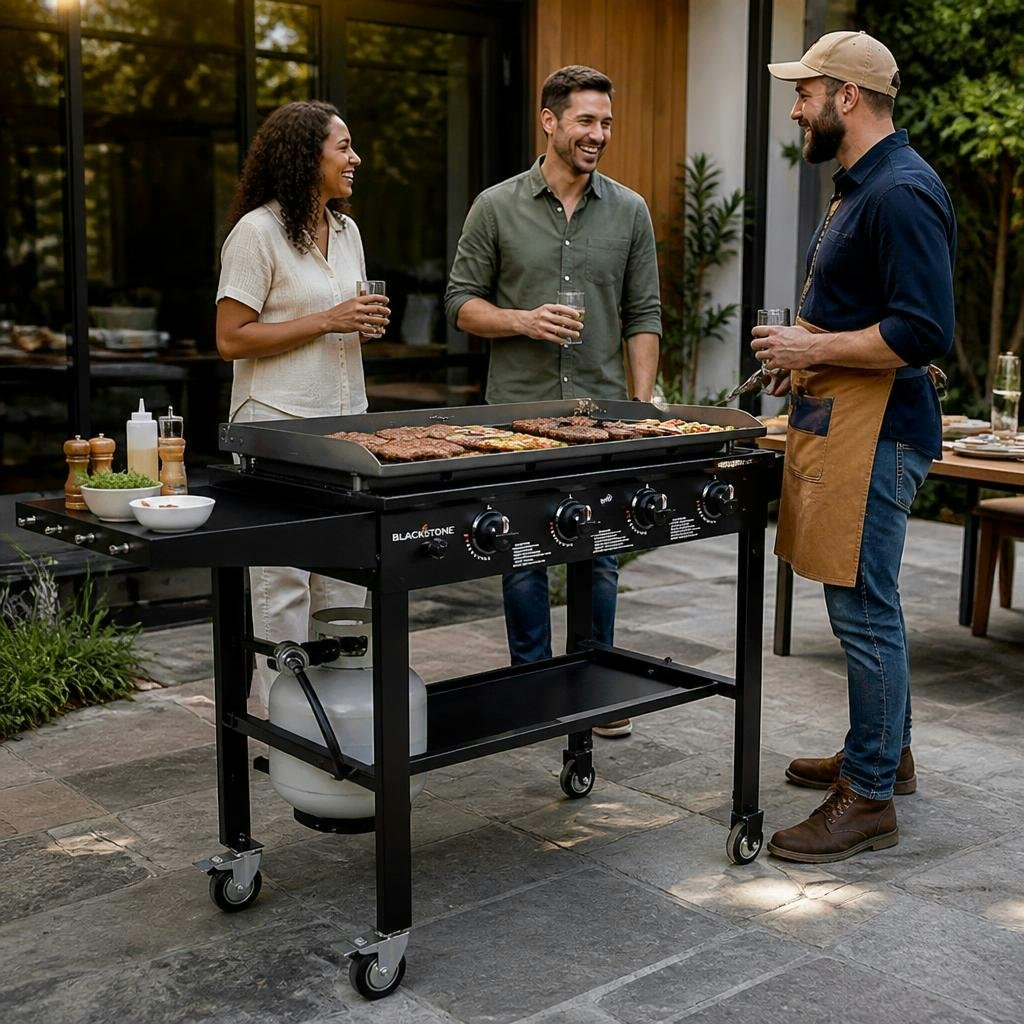
A grill and a griddle solve different cooking problems. A griddle's flat cooking surface may suit a menu that needs contained contact with the surface, while a grill may suit other foods and the presentation you want. The choice should follow the menu and the operator's experience. Avoid booking an unfamiliar appliance solely because its name sounds more commercial.
The portable propane griddle is a separate catalogue option. Confirm its exact configuration, fuel needs and permitted use rather than assuming it is an accessory that can be fitted to any other BBQ. Similarly, if you request the listed BBQ griddle, ask which rental unit it is compatible with and whether any additional pieces are required. Compatibility needs confirmation before pickup.
Consider how multiple food choices will be managed. Vegetarian food, raw meat and ready-to-eat items may need distinct utensils and working arrangements. If a guest has an allergy, discuss the preparation requirements with the food provider rather than promising separation that your setup cannot reliably maintain. More surface area is only useful when the operator can use it in an organised way.
How long will the propane last?
Cody lists 3-foot and 4-foot propane BBQs. Their catalogue names do not verify manufacturer, generation or burner rating. Before giving a reliable fuel allowance, confirm the actual model plate, cylinder connections and filled propane weight with Cody. Size alone cannot establish how many hours a tank will last.
For a planning calculation, theoretical hours = propane weight in pounds × 21,548 BTU per pound ÷ total appliance input in BTU per hour. The energy figure comes from the Propane Education & Research Council. This estimates fuel energy at continuous rated input, not guaranteed usable cooking time. Preheating uses fuel too, and temperature, vaporization limits, remaining fuel and burner settings affect real operation.
As a conditional manufacturer example, Crown Verity’s January 2016 specifications rate the MCB-36 at 79,500 BTU/h with one propane connection and MCB-48 at 99,000 BTU/h with two. These are not confirmed specifications for Cody’s rental fleet. Different generations or fuel configurations must use their own ratings.
Use runtime examples to ask the right fuel questions
| Illustrative setup only | Theoretical continuous rated-input time |
|---|---|
| 2016 MCB-36 rating; 20 lb of propane | 20 × 21,548 ÷ 79,500 ≈ 5.4 hours |
| 2016 MCB-48 rating; two full 20 lb cylinders, 40 lb total | 40 × 21,548 ÷ 99,000 ≈ 8.7 hours |
These arithmetic examples are energy estimates, not recommended booking durations or a promise that either rental will run that long. Do not schedule service to the last theoretical minute. Have Cody confirm an appropriate reserve for the actual BBQ, weather and programme. A partially filled cylinder changes the calculation; the cylinder’s nominal size does not prove its remaining contents.
Crown Verity’s standard propane guidance specifies one 20 lb cylinder for its 36-inch models and two for its 48-inch models, with exceptions for special configurations. On a two-connection grill, the second connected cylinder can supply another burner circuit rather than serving as a spare. Never assume one cylinder powers the entire unit, or improvise hoses or adapters to make it do so.
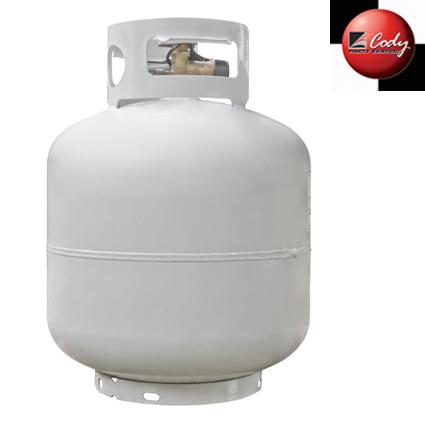
Add the filled propane tank item to your discussion: the catalogue states that propane is not included in the BBQ rental. Confirm quantity, connections, reserve storage and the approved changeover procedure. A four-hour lunch service also needs fuel for preparation and any later cooking; describe the full working schedule when arranging your order.
Choose an appropriate outdoor cooking location
A barbecue needs a suitable outdoor working area, not simply an empty patch near the party. Health Canada advises using it outside in a well-ventilated location on an even surface, away from combustible materials and building openings. Follow the supplied unit's clearances and the applicable site requirements. Do not move the grill into a garage or an enclosed space because rain begins during service.
Keep the cooking zone separate from guest queues, play areas and routes used to carry dishes. Consider where smoke and heat may travel, and leave operators a workable approach without someone squeezing behind them. A tent for guests is not automatically an approved cooking shelter. If weather protection is proposed, have the arrangement reviewed before the event rather than assuming it makes indoor-style cooking acceptable.
The venue may have additional restrictions, including rules about fuel, paving, lawns or fire equipment. Send a simple site sketch showing the cooking area, food service, access route and nearby structures. A photograph can help identify questions, but it does not replace a site review where one is required. Resolve these details before finalising the rental order.
Give the cook a complete work area
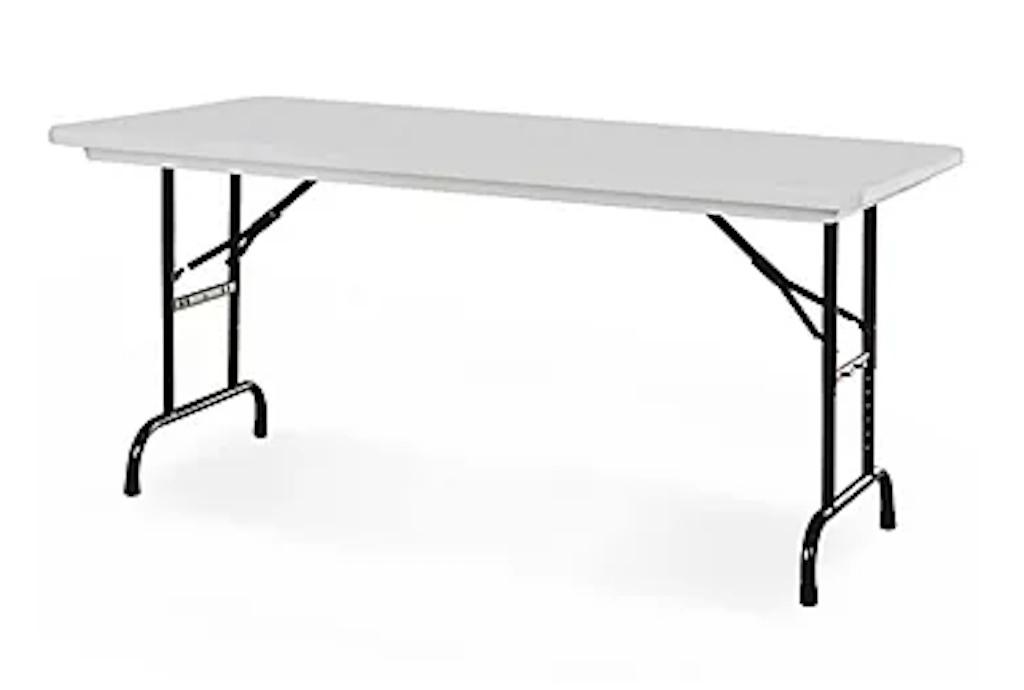
A grill needs support space. Allocate one preparation area for raw ingredients and a separate clean area for food ready to serve. Keep the equipment and utensils for those jobs clearly identified. A six-foot rectangular table may help organise a service area, subject to its suitability and placement, but the table is not a heatproof landing place for hot components or cookware.
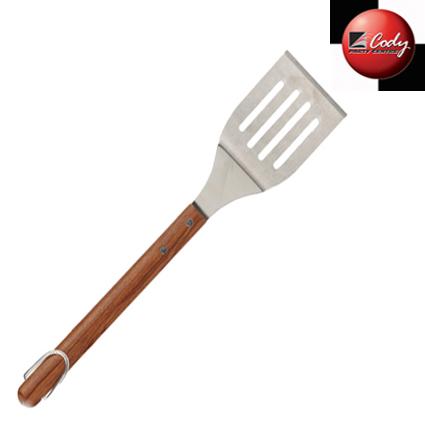
Add appropriate serving utensils, trays and food containers to your planning list. A BBQ spatula is one catalogue option to consider, while your cook may need other tools suited to the menu. Check what is actually supplied with each rental instead of assuming every accessory shown in an image is included. Keep spare clean utensils available so a dropped tool does not stop service.
Think about storage below and beside the work surface. Boxes of buns, packaging and decorations should not crowd the heat source or obstruct the operator. Put waste and used dishes where they can be managed without crossing the raw-food preparation area. The goal is a simple sequence from cold storage to cooking to service, with no unnecessary backtracking.
Build food safety into the service plan
Use a digital food thermometer and check the safe internal temperature for the specific food in Health Canada's guidance. Colour, grill marks and a guessed cooking time are not reliable substitutes. Keep raw food and its utensils separate from cooked food, and provide a practical handwashing arrangement. These steps need supplies and time, so include them in the plan rather than treating them as extra tasks for the cook.
Cold storage must last until the food is ready to be prepared. Health Canada recommends cold holding at 4°C or below and hot holding at 60°C or above. A tray on a serving table is not a controlled holding system. Discuss suitable equipment and monitoring with the person responsible for the food, especially if you plan to cook ahead of a large rush.
For a public fundraiser or other organised food event, check the requirements with the venue and local public health authority early. The organiser's responsibilities can extend beyond the rental equipment. Do not assume a familiar backyard menu automatically has the same operating requirements when served to the public. Your rental request should fit the food-service plan, rather than substitute for it.
Assign people to specific jobs
Decide who operates the barbecue, who handles uncooked food and who serves guests. A small gathering may combine some roles, but a busy event needs enough help that one person is not expected to cook, take payments, answer questions and fetch supplies simultaneously. The cook should be able to concentrate on the appliance and food without leaving it unattended.
Use a short briefing before service. Identify which utensils belong to each task, where food is stored, how dietary requests are handled and who makes decisions if the schedule changes. Set a clear method for communicating quantities: “twelve portions ready” is more useful than “almost done.” Someone at the serving area can then pace the queue without repeatedly interrupting the cook.
Build breaks into a long event and make handovers explicit. The next operator needs to know the condition of the equipment and the food, not just the time remaining. If your available team cannot support the proposed menu, simplify it. A smaller, well-run selection often gives guests a better experience than a complicated menu that creates long waits and rushed handling.
Test the plan with an example
Consider a one-hundred-person community lunch with a one-hour serving period. You estimate 120 main portions after allowing for the specific guest mix, then divide them between two menu choices. Before selecting equipment, ask whether both choices use the same cooking method and whether dietary needs require separate preparation. Next identify whether people will arrive gradually or all at once after an activity.
Suppose most guests arrive during the first fifteen minutes. That is the demand your plan must address, not the gentler average of two portions per minute over the whole hour. Discuss the likely batch capacity with the supplier or caterer, and look at whether an earlier, safely controlled preparation stage or staggered serving would be more practical. Do not invent a grill's output from its advertised length.
Now add the supporting items: fuel, preparation and service tables, utensils, food storage, dishes or packaging and a waste plan. Assign the people needed for each stage. This process gives you a rental list supported by a real operating plan, instead of a single barbecue chosen on the assumption that a hundred guests always means the same equipment.
Request the rental with the right details
Send Cody your event date, location, menu, estimated portions, serving window and collection or delivery preference. Include any access constraints and describe the proposed outdoor cooking area. Ask for confirmation of the appliance supplied, fuel arrangement, accessories, operating instructions and expected return condition. Availability is confirmed through the rental request process; a catalogue listing alone does not reserve the equipment.
Leave enough time after the final serving for the equipment to cool and be prepared for return according to the supplied directions. Do not plan to load a hot barbecue immediately after lunch. Keep small parts and utensils together, and confirm how grease or food waste should be handled rather than emptying it onto the ground or into an unsuitable drain.
Before the event, make one final check of the plan against the confirmed order. Count the equipment and accessories, confirm the operator and review the weather contingency. If something important has changed, tell the team promptly. The most useful barbecue rental is one that matches your actual menu, site and service schedule, with the supporting details settled before guests arrive.
Further reading & sources
Check current instructions and requirements for your event and the equipment supplied.
- Health Canada: Barbecue and portable butane stove safety ↗
- City of Ottawa: Outdoor fire safety ↗
- Health Canada: Food safety tips for barbecuing ↗
- Health Canada: Safe internal cooking temperatures ↗
- Crown Verity: January 2016 MCB model specifications ↗
- Crown Verity: support and propane cylinder guidance ↗
- Propane Education & Research Council: Technical Pocket Guide ↗