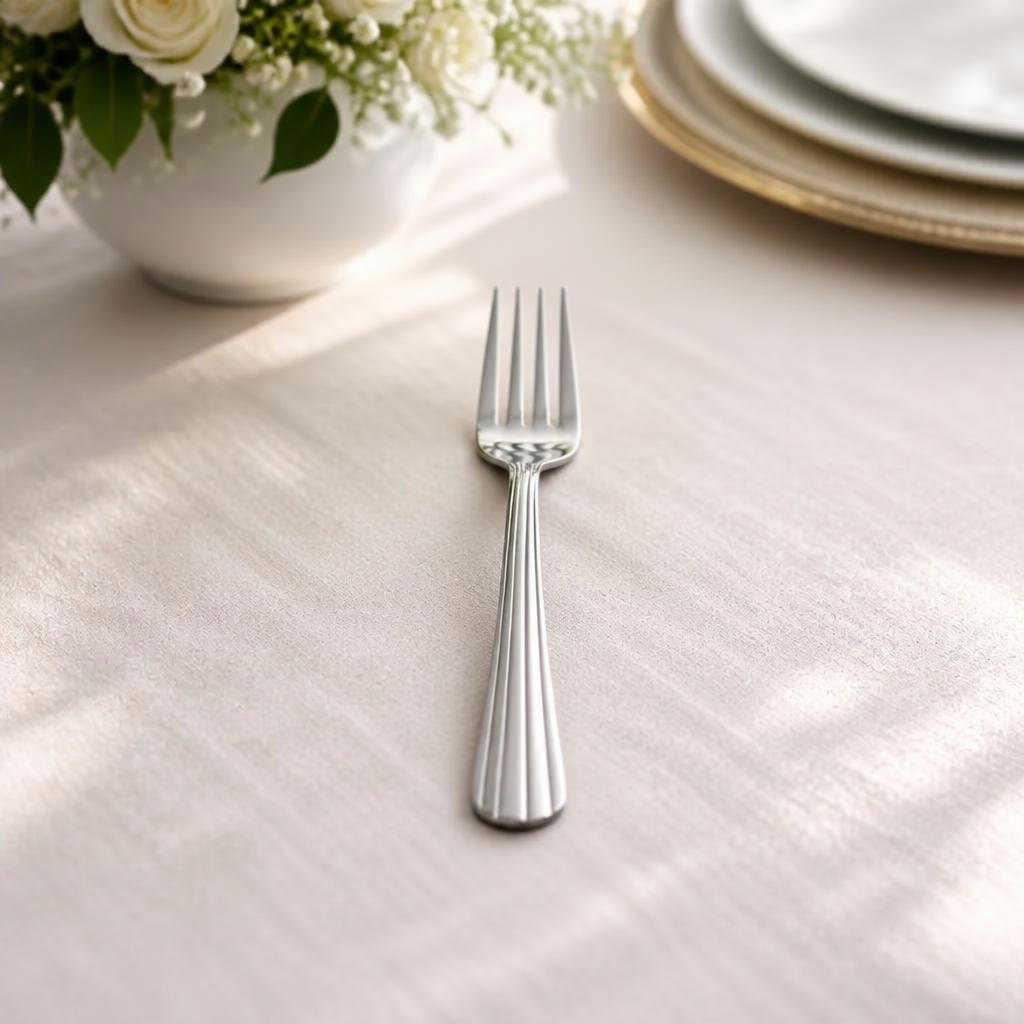
Use the menu as your cutlery checklist
Start by writing every course in the order guests will eat it. Include welcome food, a starter, the main meal, dessert and coffee or tea. Beside each course, list the tools a guest actually needs. A soup course suggests a spoon; a plated main usually needs a fork and knife; cake may need a dessert fork; coffee needs a spoon if guests will stir it. This approach is more useful than copying a formal setting with pieces your menu never uses.
Your caterer can help resolve the uncertain items. A substantial salad may be easier to eat with both a fork and knife, while a soft dessert may work better with a spoon than a fork. A menu name alone does not always reveal the texture or presentation. Ask how the food will be served before deciding which utensil is appropriate.
Keep this menu sheet alongside your dish and glassware counts. The three lists should tell the same story. If your dish order includes soup bowls but the cutlery order has no soup spoons, you have found a gap before the event. If you have ordered three forks per guest for a one-course dinner, you may have found an unnecessary addition.
Choose dinner utensils for the main service
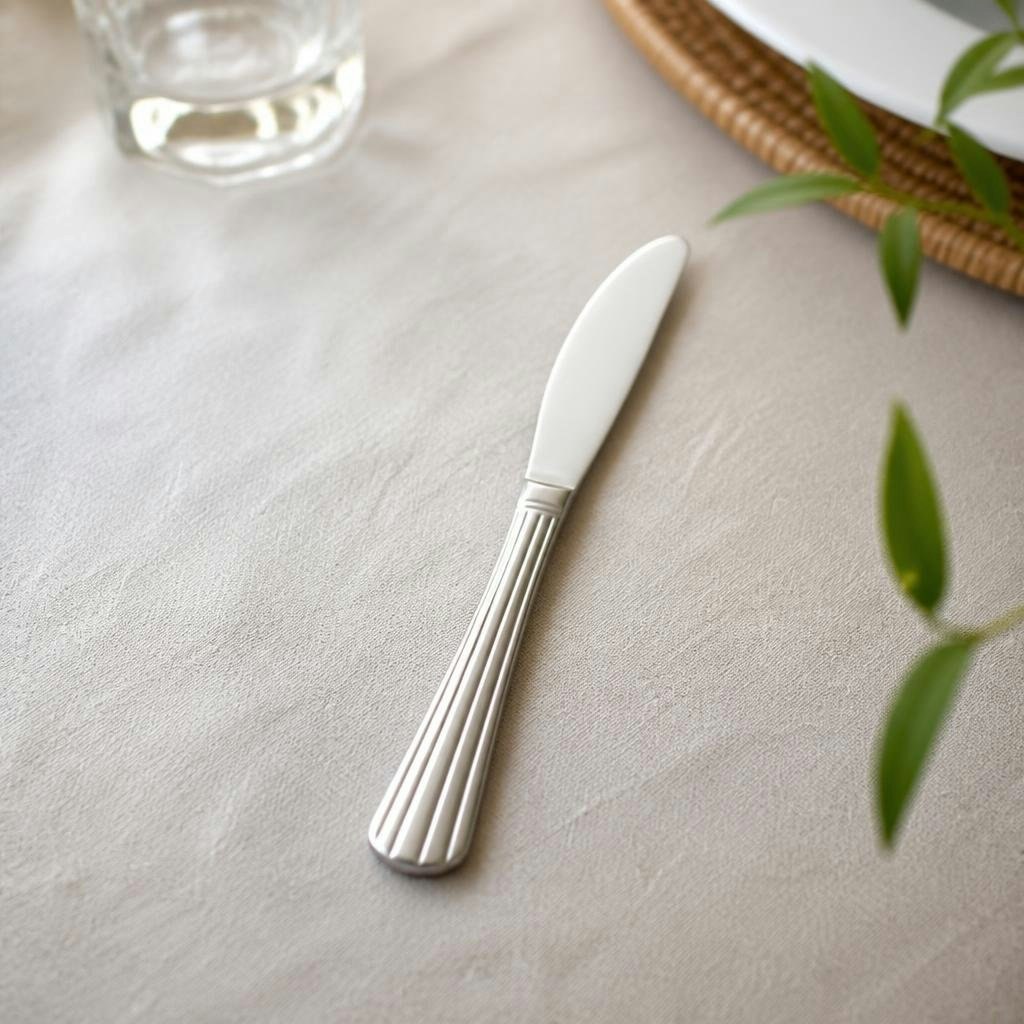
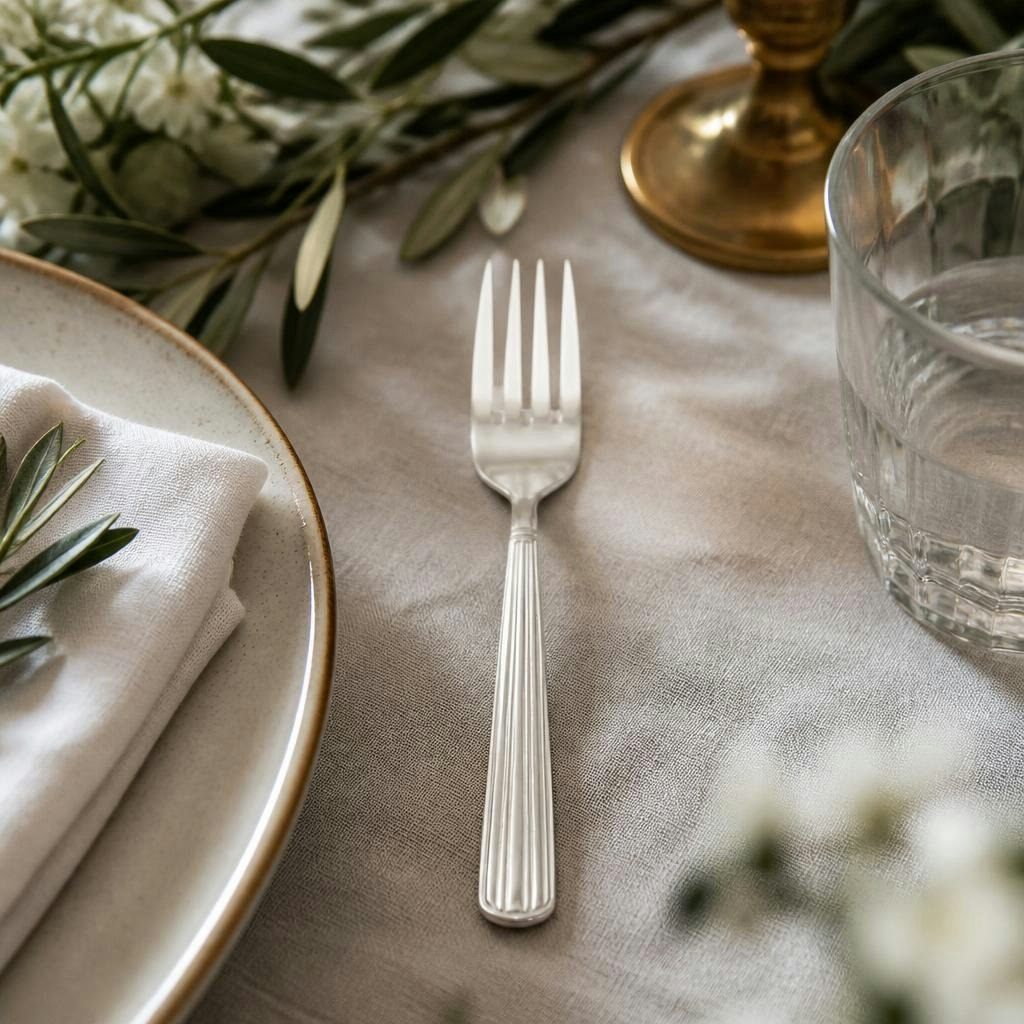
For a straightforward main course, begin by reviewing Fork - Dinner and Knife - Dinner. Confirm the item descriptions and the look you want before multiplying by your guest count. A simple, consistent set is often easier to stage and clear than several nearly identical styles. The goal is comfortable eating and smooth service, not the largest possible number of pieces on the table.
If the menu includes food that needs a different knife, discuss that with the caterer. Do not assume a standard dinner knife is the best choice for every preparation. Equally, do not add a specialty knife merely because the meal includes meat; texture, preparation and portioning matter. The service team should identify what is genuinely useful.
Think about guests who need assistance or different utensils. Ask hosts to collect any relevant requirements privately and pass them to the caterer or coordinator. Standard rental cutlery will not solve every accessibility need, so identify special arrangements early. Keep those arrangements distinct from the general order. A well-planned main setting has the utensils the menu calls for, with suitable alternatives arranged deliberately rather than improvised after guests sit down.
Treat starters as a separate service when they are separate courses
A starter served before the main meal often needs its own cutlery because the first pieces will be cleared with the first dishes. If the caterer intends to clear the starter fork, you need another fork for the main. It is not enough to count one fork per person and hope guests keep it. Decide whether each piece remains or leaves the table and put that decision in the service notes.
The Fork - Dessert/Salad is a catalogue option to review for a salad or dessert course. Its role in your event should be clear. If you use the same item for both salad and dessert, count two uses per guest unless an appropriate washing and turnaround arrangement is confirmed. A shared product name does not mean the same physical fork can be in two services at once.
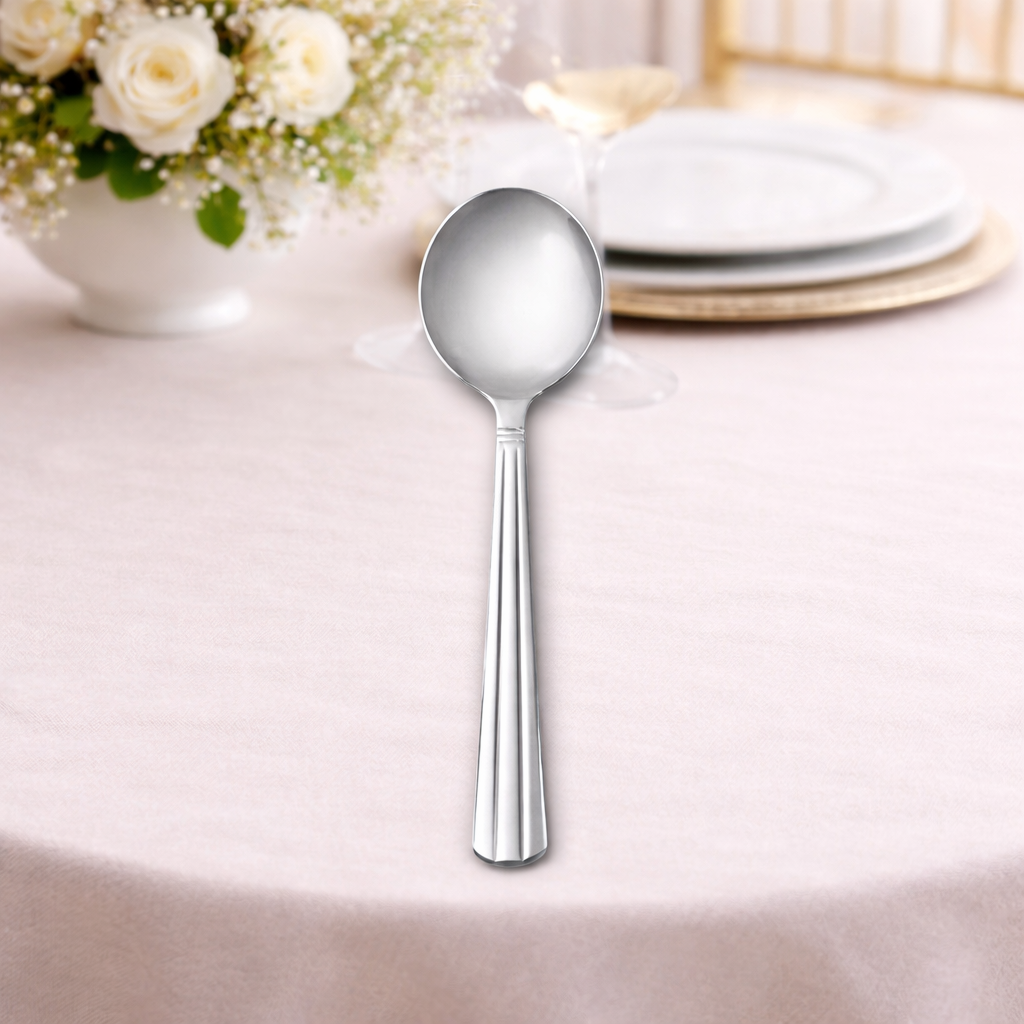
For soup, consider Spoon - Soup and confirm it suits the bowls and serving style. If soup is the only starter, you may not need a separate starter fork at all. This is where menu-led planning saves unnecessary rentals. Each course should have a simple answer to three questions: which dish, which utensil, and who clears it before the next course arrives?
Do not forget dessert and coffee
Dessert is often planned after the rest of the meal, which makes its cutlery easy to miss. A cake table needs enough forks or spoons for the people taking dessert, not only a knife for cutting the cake. Individual desserts may already come with a utensil, but confirm that with the supplier instead of assuming. If guests will choose from several desserts, consider whether they will return for another fresh plate and utensil.
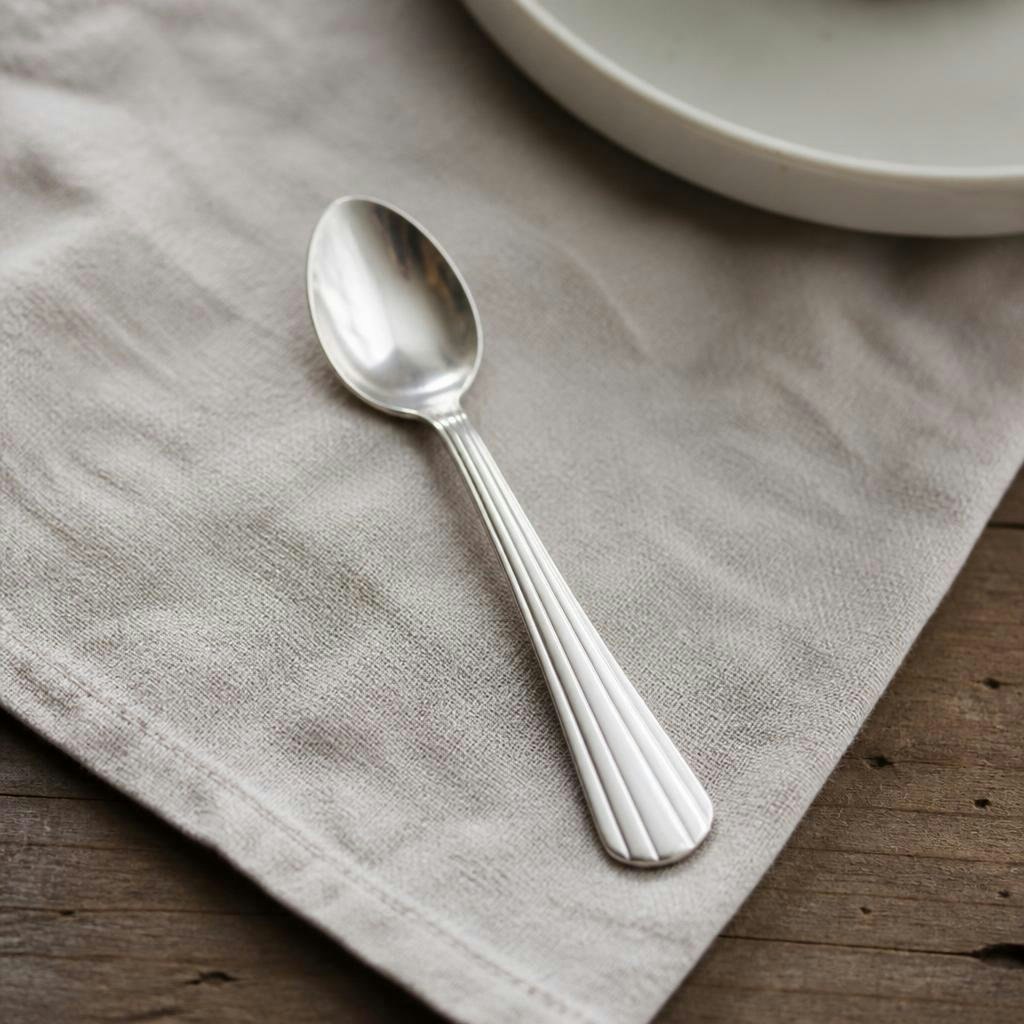
The Spoon - Tea/Dessert can be reviewed for a tea or dessert service, depending on the actual menu. Coffee and dessert may happen at the same time, but one spoon should not be counted as available for both tasks if your plan requires separate pieces. A guest eating a dessert with a spoon still needs a way to stir a separate hot drink if that is part of the service.
Count dessert and coffee users independently when appropriate. At a dinner for 80, perhaps all 80 receive dessert while 48 are expected to use a hot-drink station. Those are planning assumptions to confirm with your team, not automatic proportions. Keeping the counts separate lets you adjust the coffee order without changing the dessert order and makes the final request much easier to review.
Count guest cutlery and serving utensils separately
Guest utensils are multiplied by people and courses. Serving utensils are multiplied by dishes, stations and replacements. Mixing those two counting methods is a common source of shortages. A buffet with six food dishes needs a suitable serving tool for each, even if the guest cutlery is completely pre-set on the dining tables. Two identical buffet lines may need two complete sets of serving tools.
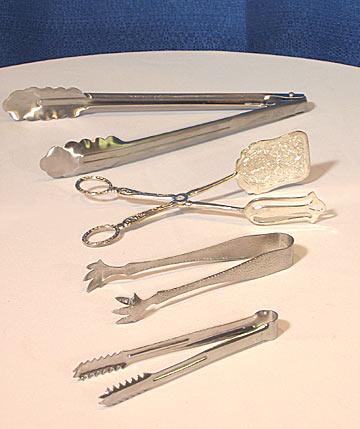
The Tongs-Serving-Stainless Steel is one possible tool to review for foods that can be served with tongs. Other menu items may need serving spoons, forks or ladles. Ask the caterer to match each food to its utensil and confirm whether the tools are supplied with the food. Do not assume a chafing-dish rental automatically includes every serving tool needed for its contents.
Plan clean replacements for serving utensils that are dropped or otherwise need to be removed from use. Keep the reserve accessible to staff but separate from the tools guests can pick up. For dishes prepared for particular dietary needs, discuss dedicated tools and service arrangements with the caterer. A label alone does not prevent utensils from being moved between dishes, so the staffing plan matters as much as the equipment list.
Work through an example for a three-course meal
Imagine a dinner for 60 guests with soup, a main course and cake, followed by optional coffee. The base order could include 60 soup spoons, 60 dinner forks, 60 dinner knives and 60 dessert forks. If 36 guests are expected to use coffee service, begin with 36 teaspoons. This example assumes each course uses fresh, separate pieces and the caterer agrees with those utensil choices.
Now add a chosen reserve of six pieces to each dinner-course line. Each becomes 66 before rounding. If the selected cutlery section is ordered in dozens, that becomes 72 of each. Coffee could become 42 with the same six-piece reserve and then 48 after rounding. Review those reserves after rounding rather than adding another percentage automatically. You may already have more spare pieces than you need.
Next add the separate serving tools: for example, the cake-cutting and serving tools plus whatever the caterer requires for plating. Those do not appear in the guest-per-course calculation. Finally, include vendor meals if they use your cutlery. This worked example is not a package recommendation; it shows how to keep each assumption visible so the order can change cleanly when the menu or attendance changes.
Decide whether to preset, roll or hand out cutlery
Preset cutlery makes the dining table feel ready and keeps guests from carrying utensils through a buffet. It also means the setup team must place the right pieces at every seat. A rolled napkin bundle can be convenient for a casual meal, while an attended distribution point may work for a different service. Choose the method with your caterer and venue rather than treating presentation as a separate decision.
If you roll cutlery in napkins, decide exactly what goes in each bundle. A main-course fork and knife may belong together, while dessert forks remain at the dessert table. Avoid putting every utensil for the entire evening in a large roll if guests will have nowhere to keep unused pieces. That can lead to clean dessert utensils being cleared accidentally with dinner plates.
For buffet service, consider placing cutlery at the end of the line or on dining tables so guests can carry plates more comfortably. The best location depends on your layout. Make one test journey with a plate and the planned bundle before finalizing it. A small adjustment during setup can prevent a bottleneck that would be difficult to change once guests are moving through the buffet.
Arrange a setting that is easy to understand
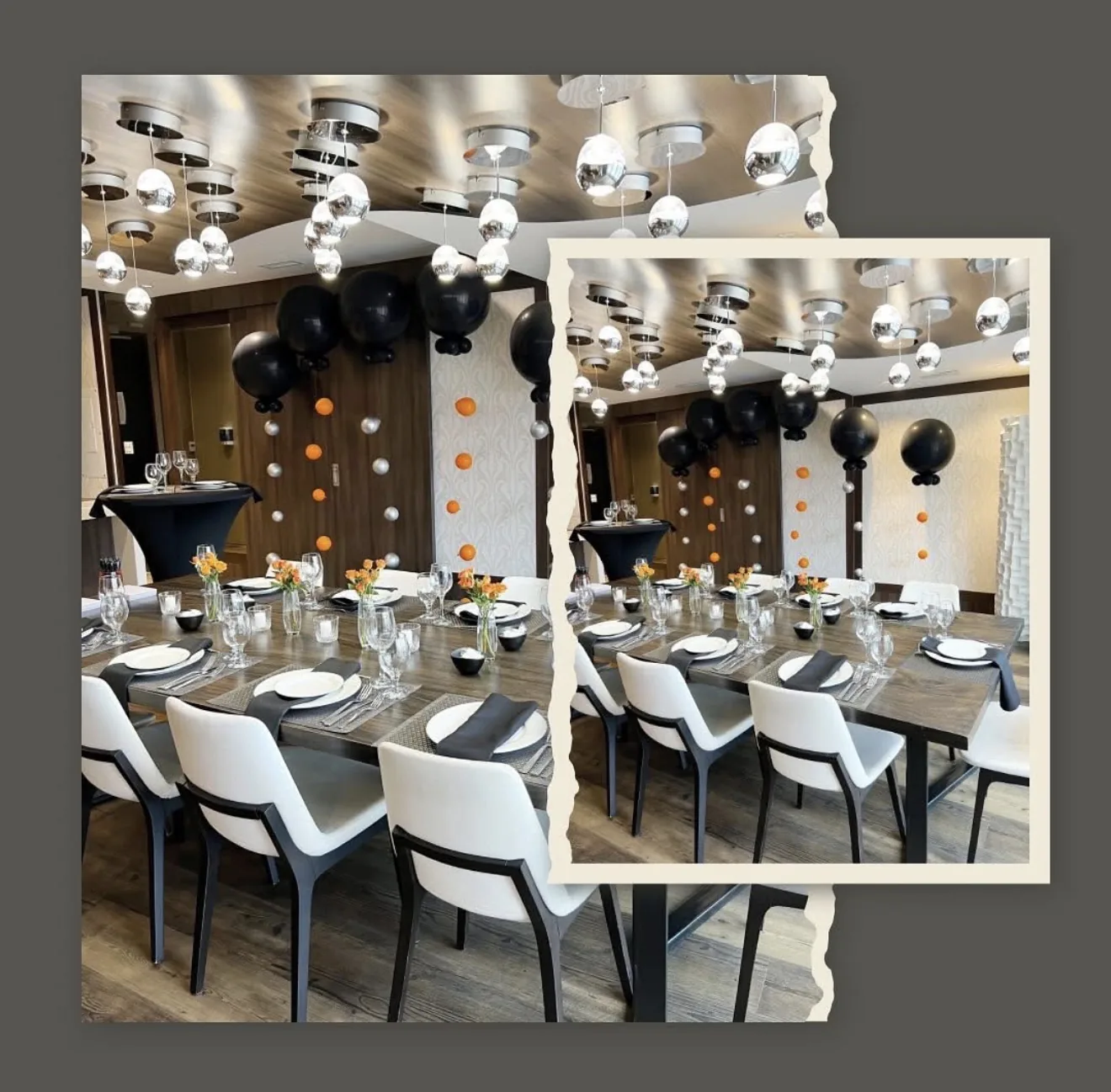
For a conventional place setting, utensils can be arranged in the order guests will use them, with the earlier course farther from the plate. But a practical event setting does not need to become an etiquette test. Set only the pieces required for the courses being served, and keep their placement consistent across the room. Guests should be able to sit down and understand the arrangement without explanation.
Check the whole place setting, including glasses, napkin, bread plate and any printed menu. A table that looks spacious with only a dinner plate can become crowded once everything is added. Leave enough usable space for guests to handle their utensils comfortably. If the setting is tight, simplify the presentation or adjust the table plan rather than squeezing more pieces into the same area.
Consider the clearing sequence too. Ask the service lead which utensils will be removed with each course and which should remain. Brief helpers accordingly. A dessert fork accidentally cleared after the starter creates a shortage even when the original count was correct. Clear decisions and consistent placement often prevent more problems than ordering a large quantity of extra cutlery.
Organize clean supply and used returns
Keep clean cutlery in its protective packaging until it is needed for setup or service. Create a clearly labelled reserve that staff can reach without searching through the entire rental order. Separate guest pieces from serving tools. A box labelled “spares” is less useful than one divided into dinner forks, knives, dessert pieces and serving replacements.
Plan where used cutlery will go as dishes are cleared. Small pieces are easy to lose in napkins, food waste or mixed dish piles. Ask the clearing team to check before napkins and rubbish are gathered. Use the return packaging and preparation instructions supplied with the order rather than improvising a container that could damage pieces or make counting difficult.
If the event uses multiple rooms or service stations, assign a final sweep of each area. Dessert cutlery may remain beside a cake display while dinner cutlery has already been packed. Coffee spoons can collect in a kitchen or staff room. Count by item type against the order sheet before loading the return. A deliberate end-of-event process protects the order and gives you a clear record if something needs to be discussed with the rental team.
Review the final request with the service lead
Before submitting, have the person responsible for food service read the cutlery list alongside the menu. Ask them to confirm every course, every separate service point and the intended clearing sequence. Check whether they bring any utensils themselves. Duplicate provision is easy when the caterer and host both assume the other person has not arranged serving tools.
Your request should include exact catalogue items, quantities, event dates and pickup or delivery preference. Note any uncertainty about ordering units so Cody Party can clarify it. If you have calculated a base count and then rounded it, keep both numbers in your own worksheet. That helps you make sensible adjustments later without starting over or removing your reserve accidentally.
A final physical check is useful: assemble one dinner setting, one dessert setting and one coffee setting using the plan. Then imagine the actual food arriving. Does each guest have the right tool? Does every shared dish have a serving utensil? Are replacement pieces easy for staff to find? When those answers are clear, you have an order that supports the meal rather than simply filling space on the table.