Start with the menu, not a generic package
A good dish count starts with a simple question: what will guests eat, and how will it arrive in front of them? A dinner with soup, a main course and cake needs a different order from a barbecue where everything goes on one plate. Write the menu in serving order before opening the catalogue. Include welcome snacks, bread, children's meals, dessert and late-night food. The forgotten course is usually where the missing plates appear.
For each service, write the dish beside it. A main course might need a dinner plate, soup needs a suitable bowl, and a slice of cake needs a side or dessert plate. Coffee requires a cup or mug; a cup may also require a saucer. Do not assume a cup and saucer are a single rental item. They are separate entries in Cody Party's catalogue.
Use the menu to remove unnecessary rentals as well. If dessert is served in its own container, the dessert plate may not be needed. If there is no bread service, bread plates are optional rather than automatic. Your caterer can confirm what arrives with the food and what you need to provide. That short conversation can prevent both shortages and a surprisingly large surplus.
Build a count that includes everyone being served
Use the number of people eating each course, rather than the number on the invitation list. Start with confirmed adult guests, then add children who need their own dishes. A smaller meal does not necessarily mean a smaller plate. Ask whoever is serving the children's food what is practical. Include a separate line for vendor or staff meals if the photographer, musicians, catering crew or other people will be eating with your dishes.
For example, an event with 72 guests and six vendor meals has 78 main-course diners if everyone receives the same service. The dessert count might still be 72 if vendor meals do not include dessert. Record that distinction. It is much easier to explain a rental order with “78 dinner diners” than to remember why someone added six plates two weeks earlier.
Keep uncertain guests on a separate line until your final decision. That makes it clear whether your contingency covers attendance changes, dropped dishes or both. Avoid adding the same extra people in several places. A working sheet with columns for guests, vendors, fresh services and reserve will show exactly where each quantity came from. The goal is an order another person can understand without calling you during setup.
Choose the actual plate and bowl before calculating quantities
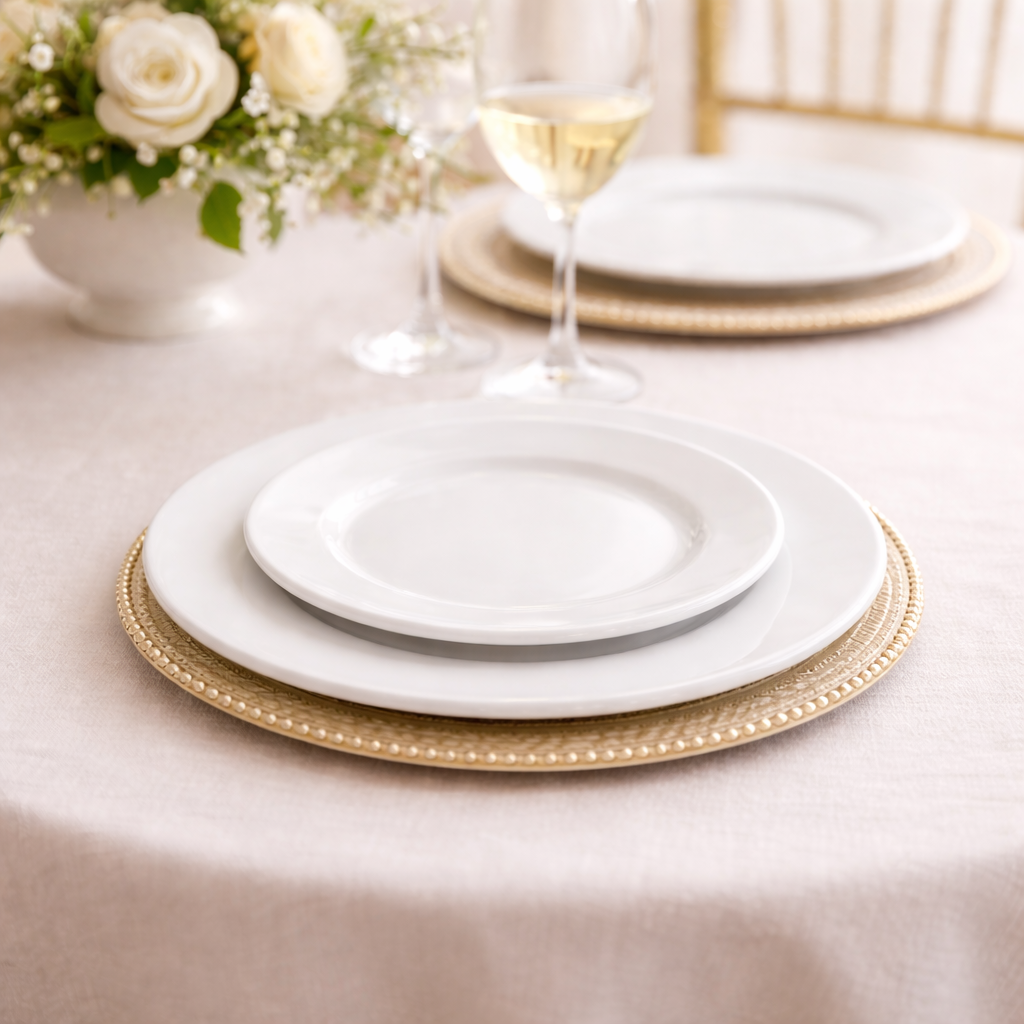
Dish sizes matter because a name such as “side plate” can cover several uses. The Sabina Plate - Dinner 10.75" is a possible starting point for a main course, while the Sabina Plate - Side Dessert/Bread 7.5" gives you a smaller option for dessert or a side service. Check the dimensions against the food presentation. A generously plated meal can feel crowded on a plate that looked perfectly adequate in a photograph.
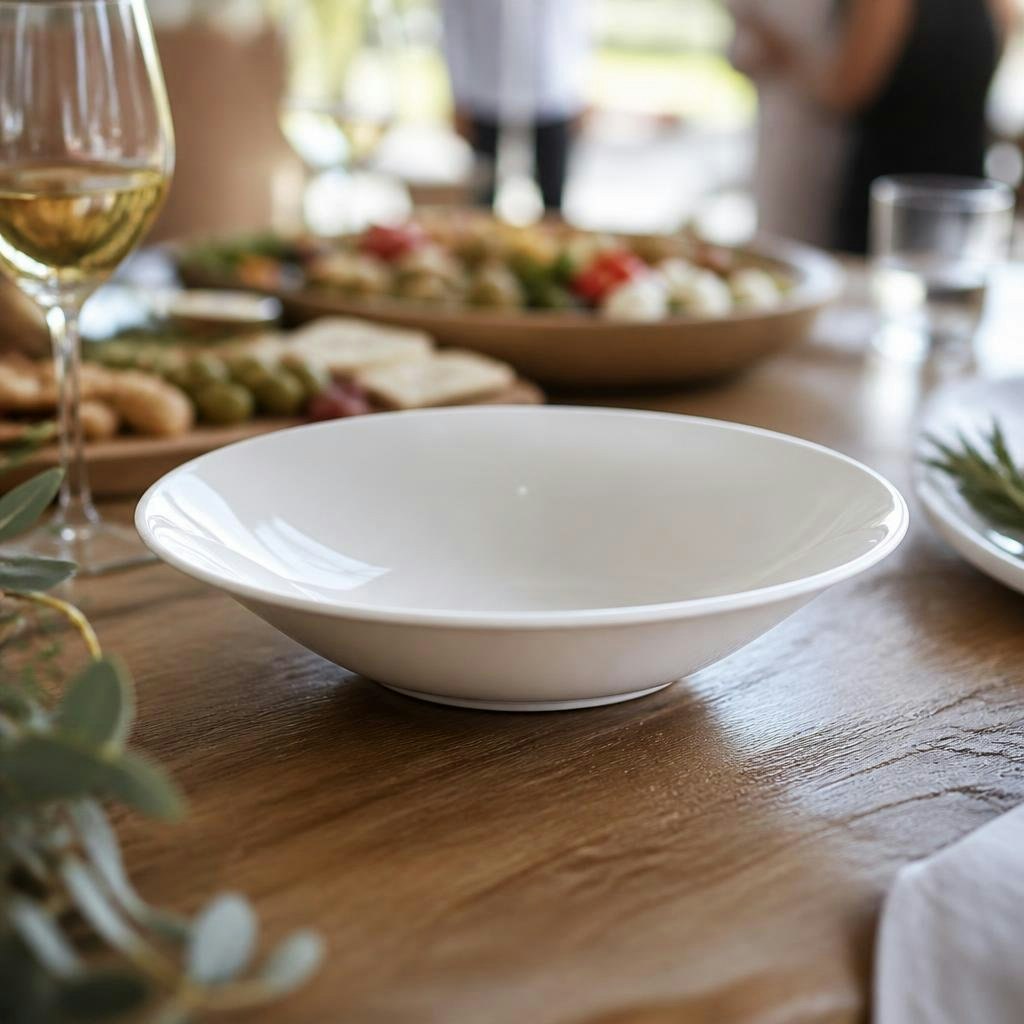
Bowls need the same attention. The Sabina Soup/Salad Bowl may suit a soup or salad course, but your caterer should confirm the intended portion and presentation. A salad piled high, a broth-based starter and a substantial pasta course do not behave the same way in a bowl. Do not select only by appearance and discover on the day that the serving utensil cannot deliver the planned portion neatly.
When mixing collections, compare them in a complete setting rather than imagining each piece separately. White pieces can have different shapes and tones. That is not automatically a problem, but it should be a choice. Keep your final dish names and catalogue identifiers on the order sheet so “dessert plate” does not accidentally turn into a different item when another person submits the request.
Calculate a plated dinner one course at a time
For a plated meal, the simplest base calculation is diners multiplied by the number of fresh dishes needed for that course. If 78 people receive one main course, the base requirement is 78 dinner plates. If those same people receive a separate starter on a small plate, add 78 starter plates. A dessert served later adds its own count. One person may therefore use three plates over the evening without anything being duplicated unnecessarily.
Suppose you choose a planning reserve of six plates for each course. That is an illustrative allowance, not a universal rental rule. Your dinner-plate requirement becomes 84. If only 72 people receive dessert, 72 plus six gives 78 dessert plates. Where a catalogue section orders by the dozen, round that dessert quantity up to 84. Explain this rounding on your worksheet so the person checking the order does not reduce it back to 78.
A course-by-course plan also lets the catering team stage dishes in the order they need them. Ask whether they want all clean plates in the preparation area or whether some should be set on guest tables. The quantity can be correct while the service still struggles because the plates are stored on the wrong side of the room.
Allow for how buffet guests actually use plates
A buffet does not always mean one plate per person. Some guests return for another serving, children may leave a plate behind, and a first plate can be cleared before someone decides to try another dish. Decide with your caterer whether fresh plates will be offered for return trips. That decision changes the count more than choosing round versus square tableware.
Use a scenario instead of a blanket multiplier. For 80 diners, you might plan 80 first-service plates and 24 additional fresh plates for return visits, then add eight replacements. That totals 112 plates; if the chosen section is ordered by dozens, the request would become 120. These are planning assumptions for that event, not a claim about what every group will use. A short lunch and a leisurely dinner with several buffet visits need different assumptions.
Keep dessert separate unless it is genuinely served on the same fresh plate allocation. A cake table placed out after dinner will often need its own stack. If an attendant clears all dinner plates before dessert, relying on guests to keep them will not work. Tell the clearing team which stages have separate rentals so the service plan and rental count agree.
Account for bread, salad, soup and shared dishes
The main dinner plate is only one line of the order. Bread plates are useful when bread is served before the main course or alongside a plated starter. A salad served separately needs its own plate or bowl. If salad goes directly onto a buffet dinner plate, a separate salad dish may be unnecessary. Match the vessel to the service, not to an imagined formal setting that your menu never uses.
Shared food introduces a different counting unit: tables rather than people. If eight tables each receive two salad bowls, you need sixteen bowls before any reserve. Bread baskets, butter dishes, sauce boats and platters follow the same table-based logic. Confirm which of those pieces your caterer brings. Personal place settings and shared serving dishes should be listed in separate groups so a count of eight is not mistaken for eight guests.
For soup, confirm whether bowls are filled in the kitchen or served at the table. That affects where clean bowls wait and whether there is room to carry them safely. Consider the serving tray and the route as part of the selection. A beautiful bowl is only useful if the service team can handle it confidently, and an accurate count is only useful if each course has the right vessel.
Plan cups, saucers and dessert service independently
Coffee service often happens after the main meal and can be easy to overlook when counting dishes. Ask whether coffee and tea will be offered to everyone, only on request, or from a self-serve station. An estimate of likely drinkers can be sensible for an attended service, but do not assume cups will be washed and immediately returned unless a real washing arrangement and staffing plan exist.
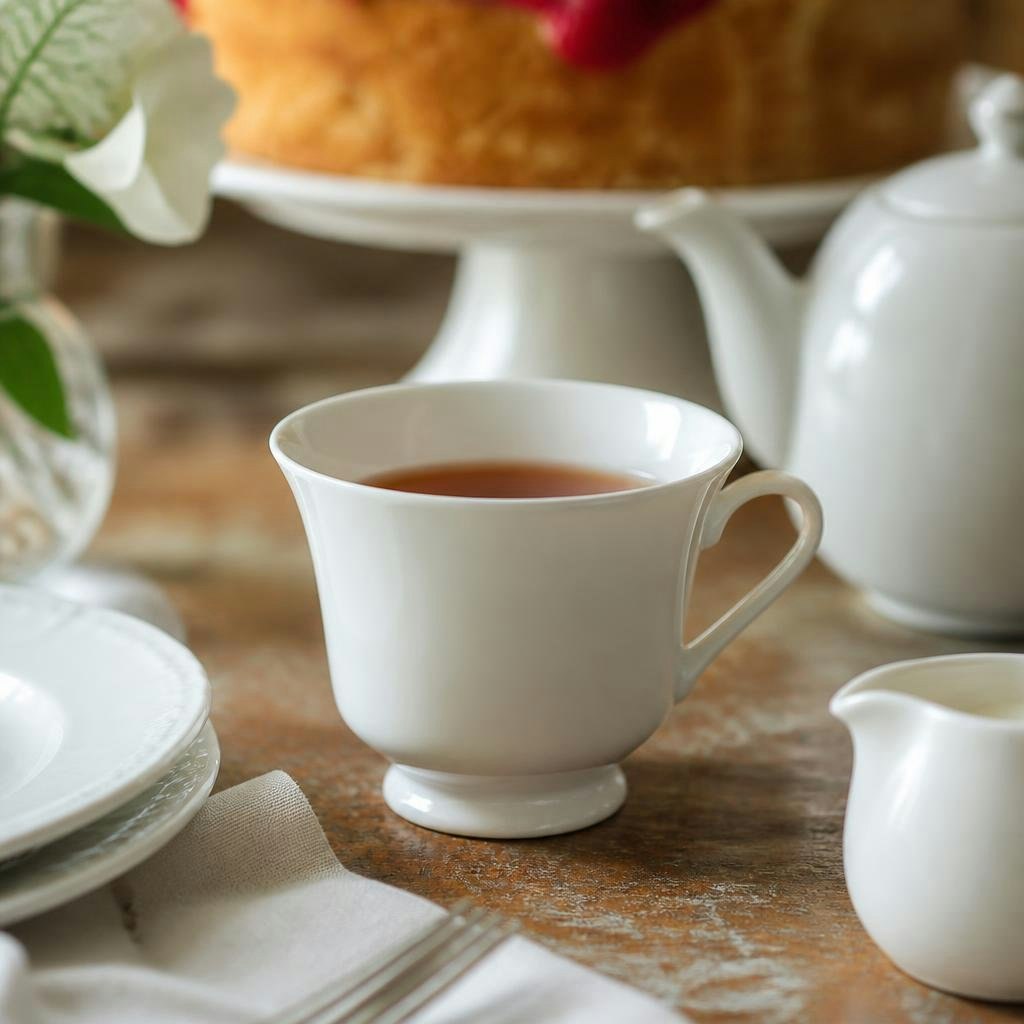
Cody Party lists Sabina Cup and Sabina Saucer separately. If you choose that combination, make both lines visible in your rental request. Add the spoon requirement to your cutlery sheet too. People sometimes order enough cups but forget saucers, or order saucers when they actually selected mugs. A quick review of one complete coffee setting catches these small mismatches.
Dessert also needs its own serving tools. A slice of cake requires something to cut it and something to lift it onto a plate. Shared dessert platters need utensils, and individual desserts may need a spoon rather than a fork. Count the guests who will eat dessert, the dishes required to serve it, and the tools needed behind the table. Those are three related counts, not a single “dessert package.”
Choose a reserve that has a clear purpose
Extra dishes are useful when you know what they protect against. A reserve might cover uncertain attendance, a plate dropped during setup, a second helping or a late vendor meal. Separate those reasons instead of adding an unexplained percentage everywhere. If return-trip buffet plates are already included, adding another large reserve for second helpings counts the same need twice.
For a small family meal, a few extra pieces may be enough. A long event with several service points needs a more deliberate plan. Consider whether replacements can be reached quickly. Keeping every spare plate in a car across the property is not the same as having a protected reserve beside the service area. Mark the reserve stack so it is not all placed on guest tables during setup.
Review the reserve after rounding quantities to ordering units. If the base count is 73 and the minimum practical order rounds to 84, you already have eleven additional pieces. You may not need to add another full reserve above that. Ask Cody Party to confirm the ordering units shown for your selected items, then record both the required quantity and the submitted quantity. This keeps the order transparent and helps you spot unnecessary extras.
Do not rely on improvised washing during the event
Reusing dishes can sound like an easy way to reduce a rental order, but it requires more than a sink and a willing friend. The washing area, appropriate cleaning and sanitizing process, drying space, clean storage and staff time all have to support the service. Your caterer or venue should confirm what is available and appropriate. If they cannot, plan enough clean dishes for each intended use.
For public food events, check the event's requirements with Ottawa Public Health before assuming reusable rental tableware is permitted. Requirements for a temporary food vendor can differ from a private dinner. That decision belongs early in planning, before you order dishes or promise a particular style of service to guests.
Even when a venue has suitable facilities, timing matters. Eighty plates cleared at once do not become eighty clean plates instantly. Someone must collect, sort, process, dry and move them without crossing the clean service area with dirty dishes. A second set can sometimes make service much simpler than arranging an urgent turnaround. Compare the full plan, including labour and space, rather than comparing only the rental quantity.
Make delivery, staging and return counts part of the plan
Before the event, decide where clean dishes will be stored and who will check them against the rental request. Keep the packaging and carriers associated with their contents so pieces can return to the right places. Put a copy of the item list at the staging area. A helper should be able to tell dinner plates from dessert plates without opening your email or interrupting the caterer.
Group the order by service stage: main meal, dessert, coffee and reserve. Keep serving utensils distinct from guest cutlery such as Fork - Dinner. At the end of the event, use the same groups to count returns. Do not leave a small stack of cups in the kitchen while the rest of the order is loaded. A final room-by-room sweep is often more useful than recounting the same crate several times.
Before submitting, review the menu, diner counts, serving method, washing assumptions and ordering units together. Then send Cody Party the dates, quantities and pickup or delivery preference with your rental request. The team can confirm availability and the final arrangement. Your finished order should explain both what you need and why, making it easier to adjust when the guest list or menu changes.
Further reading & sources
Check current instructions and requirements for your event and the equipment supplied.