Start with the setting and the schedule
Before choosing a chair colour, decide where the chairs will be used and how long guests will sit. A brief outdoor ceremony, a long dinner and a casual drop-in party create different needs. The surface matters too: a firm indoor floor, patio and lawn are not interchangeable settings. Tell the rental team about the location and any changes of area during the event so the chair choice can be considered in context.
The schedule helps you judge comfort and practicality. If guests sit through a ceremony, speeches and dinner, the chair plays a larger role than at a short presentation followed by standing activities. If chairs move between areas, someone needs time and a clear route to handle that task. If the event is mostly standing, provide suitable seating for people who need it rather than assuming chairs are unnecessary.
Write a short brief before browsing: event type, indoor or outdoor use, surface, approximate seated duration, guest count and preferred appearance. Add any known access needs or venue restrictions. That brief makes it easier to compare products without being distracted by a photograph. A chair that looks perfect in a ballroom image may be the wrong choice for the actual site or the way your event will operate.
Compare folding-chair options
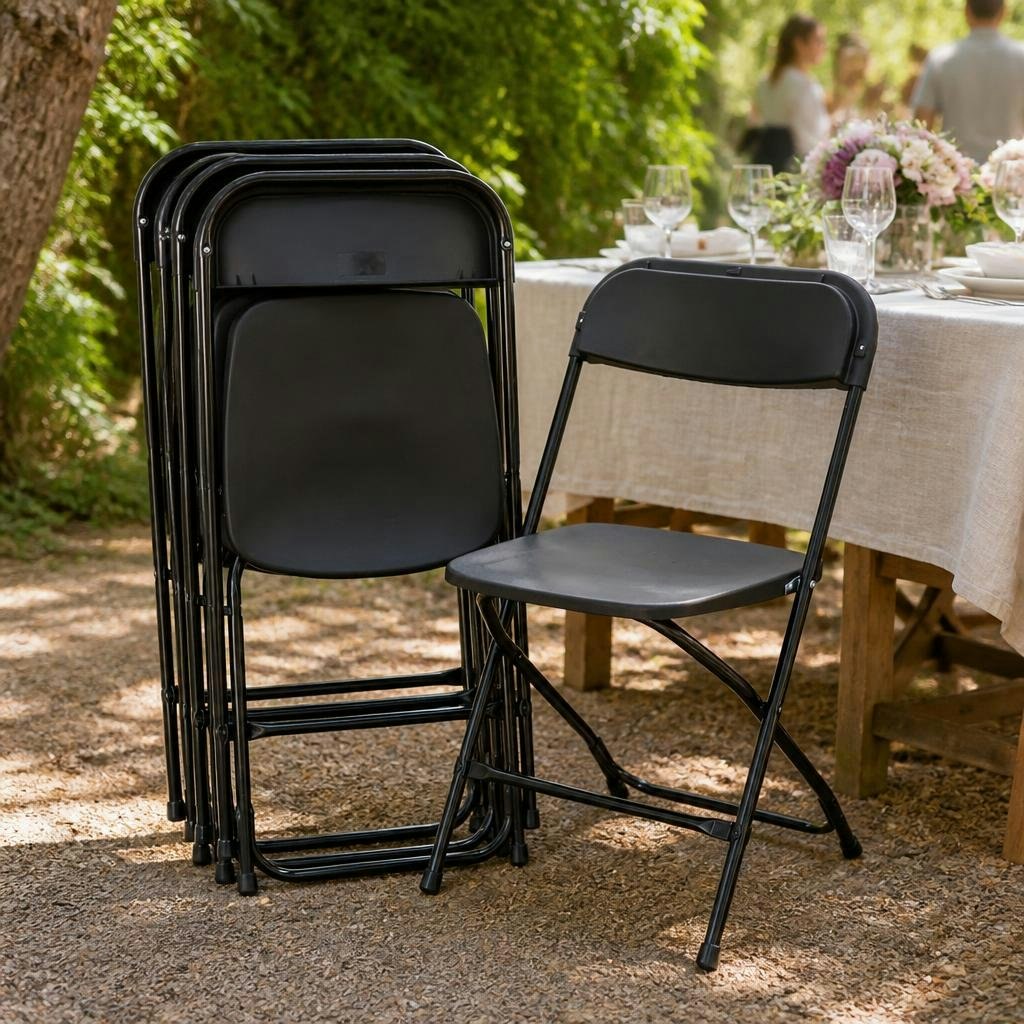
Folding chairs are a practical starting point for many parties, meetings and ceremonies. They can create a simple, consistent appearance and work with a range of table styles. The important point is to compare the exact product, not assume every folding chair has the same finish or permitted use. Colour, condition category, seat shape and the intended setting can differ within the same broad family.
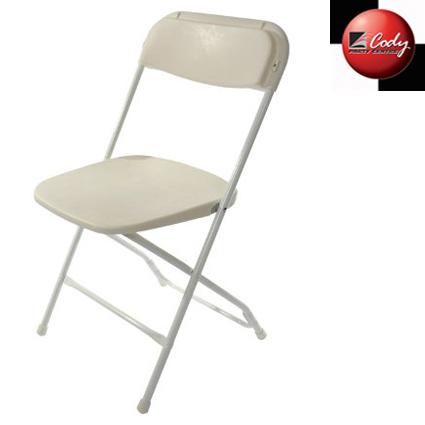
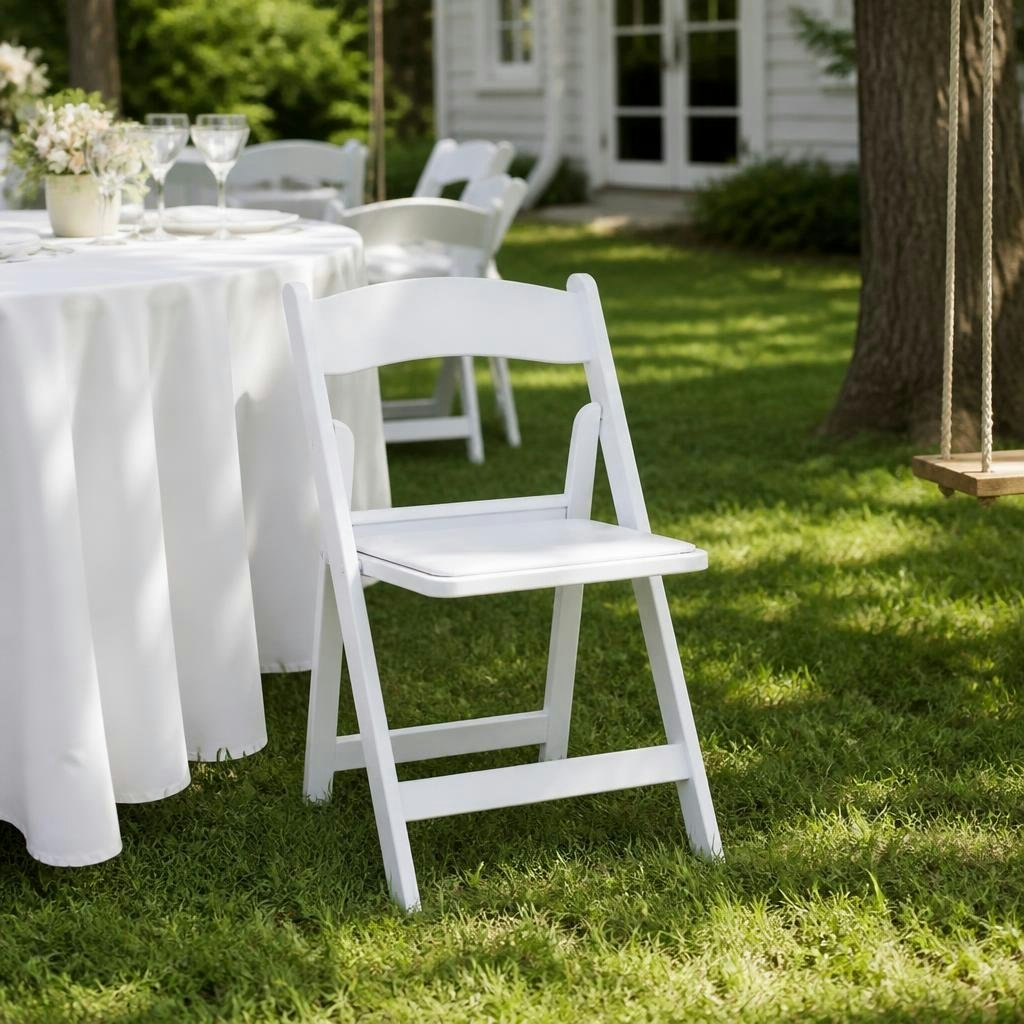
Cody’s catalogue includes Chair - Plastic Folding - Black, Chair - Plastic Folding - White Grade C (outdoor) and Chair - Plastic Folding - White Grade A - INDOOR USE ONLY. The product names distinguish white Grade C outdoor chairs from white Grade A chairs marked for indoor use only. Respect that distinction when ordering. Do not choose the indoor-only product for a lawn or patio because it appears brighter in a photograph. If you are unsure which version suits the event, explain the surface and intended use to the team.
Consider the visual role of the chair. Black can be a quiet neutral in some rooms, while white can support a lighter ceremony setting. Neither colour automatically determines formality. Linen, lighting, table settings and the overall arrangement have a large influence. Compare one chair with your actual table plan and palette, then choose the option that fits the setting and the practical requirements rather than selecting colour in isolation.
Consider resin chairs with cushions
A resin folding chair can offer a different silhouette and finish from a basic plastic folding chair. Cody lists Chair - Plastic Folding Resin Chair w Cushion, which includes a cushion in the product name. Read the exact listing and confirm the supplied configuration before completing your request. Product names are useful, but any important detail such as colour, cushion treatment or permitted use should be clear on the final order rather than assumed from a small image.
Think about how the chair looks both occupied and empty. At a wedding ceremony, rows of chairs are a major part of the scene before guests sit down. At dinner, the chair backs remain visible around the tables. A more decorative chair may allow you to simplify other elements, such as chair covers or sashes. That can reduce the number of separate items to set up, although the overall rental cost should still be compared.
If comfort is a priority, try the chair if a sample viewing can be arranged. People experience seats differently, and a cushion is only one part of comfort. Seat height, back shape and the space at the table matter too. Do not assume a particular chair is appropriate for every guest or every surface. Discuss specific needs and verify the product’s intended use with the rental team.
Use Chiavari chairs as part of the design
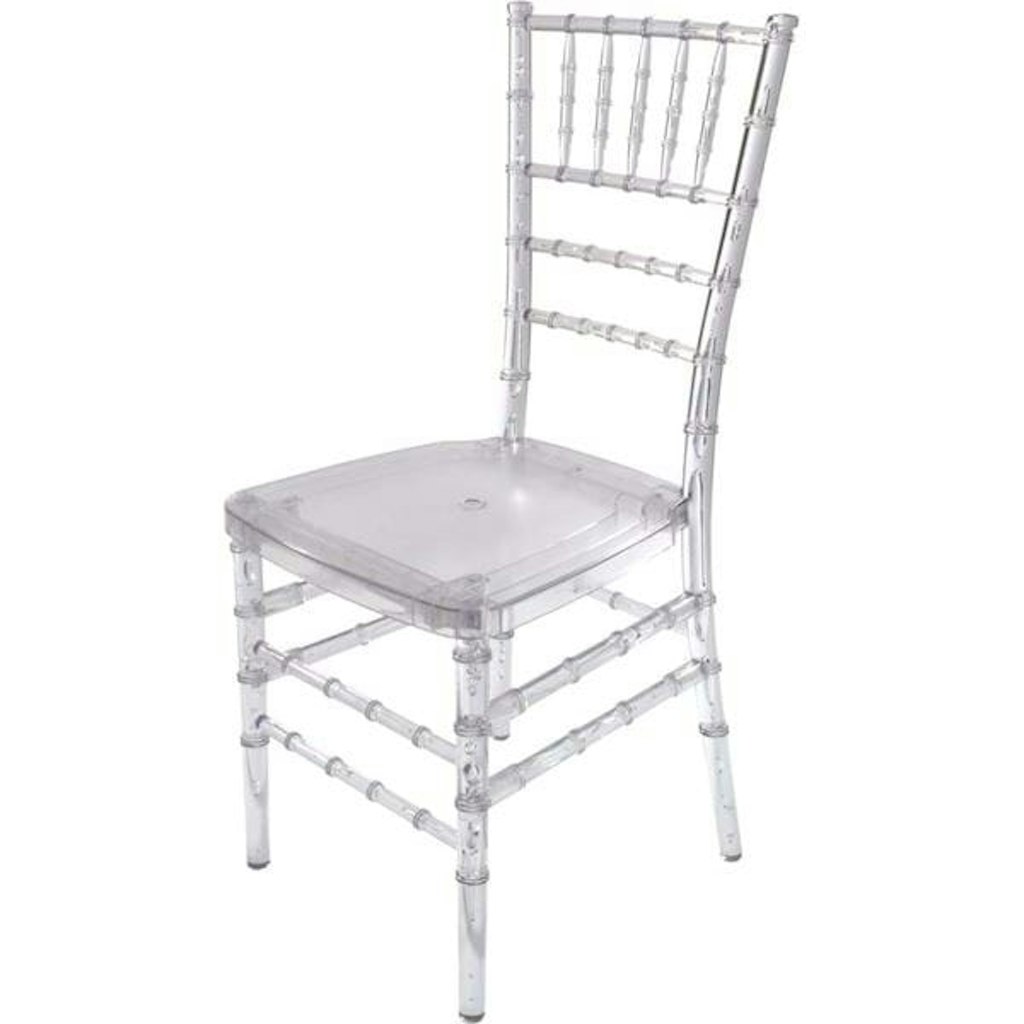
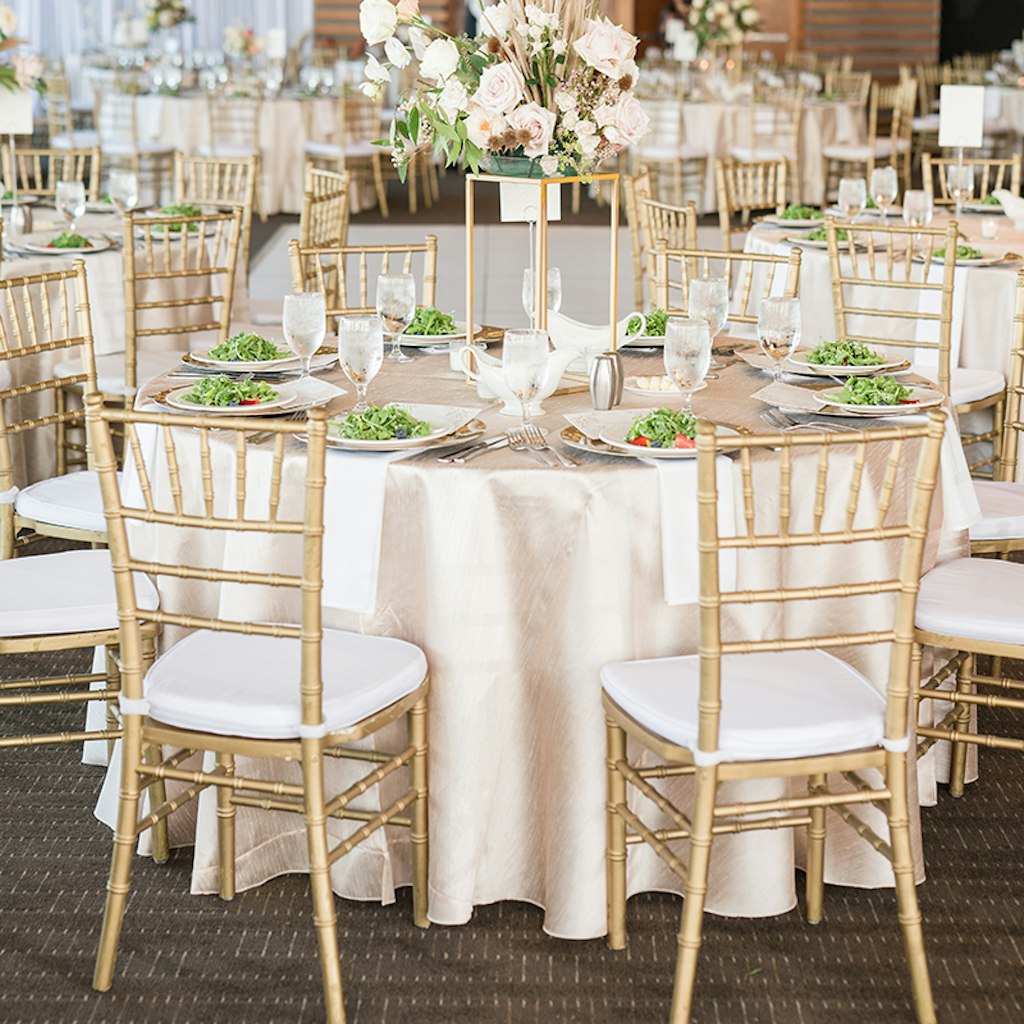
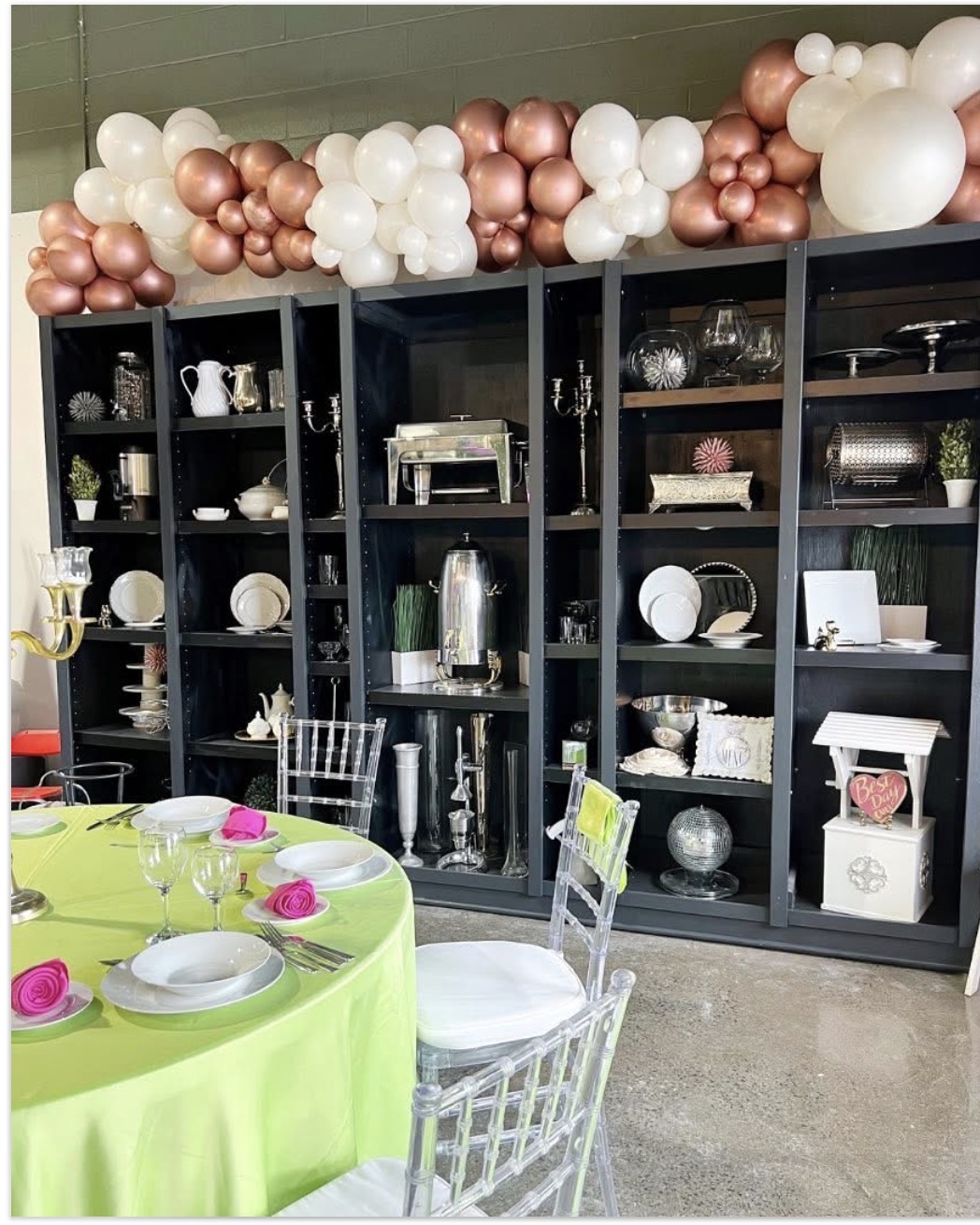
Chiavari-style chairs create a distinct visual pattern with their backs and frames. They can be a feature of the room rather than something to hide under a cover. Cody’s catalogue includes Chair - Chiavari - Crystal Clear and Chair Chiavari Resin - Gold, giving you different appearances to consider. Compare the chair with the table linen and venue finishes. Clear and gold styles can interact very differently with the same colour palette and lighting.
Check the cushion arrangement separately. A cushion-only item in the catalogue is not a complete chair, and a chair photograph does not necessarily establish which accessories are included in the rental line. Make sure the request clearly identifies the chair and any cushion or accessory needed. If you are comparing a covered banquet chair with a Chiavari-style chair, include all the parts and the setup work in both options.
Look at the full room rather than one product close-up. Repeated chair backs can add detail quickly, especially with ornate tablecloths or centrepieces. A simpler tabletop may balance a more decorative chair. Conversely, a clear chair can allow other colours to take more visual attention. These are design choices to test with a sample arrangement, not rules that one style is always more elegant or suitable than another.
Check comfort with the table, not separately
A chair that feels comfortable on its own may be awkward at the chosen table. The seat height, table height, leg position and width of the place setting work together. Put the actual or representative chair at the table and sit as a guest would. Check whether there is room for legs, whether the table edge is at a comfortable height and whether neighbouring chairs have enough space when occupied.
The meal and duration matter. A quick snack requires less tabletop space than a dinner with several courses, multiple glasses and shared platters. Do not increase the seat count just because more chairs can be pushed around an empty table. Cody’s guest-seating guidance recommends six at a 48-inch round, eight at a 60-inch round and ten at a 72-inch round as starting points. The particular chair and setting should still be considered.
For rectangular tables, test end seats as well as side seats. Table legs, joined-table seams or a narrow end may make a position less useful than it appears on a diagram. If a guest will sit through a long meal, a compromised seat is not a good solution to a small counting error. Adjust the table plan before trying to solve it with an extra chair.
Plan outdoor seating carefully
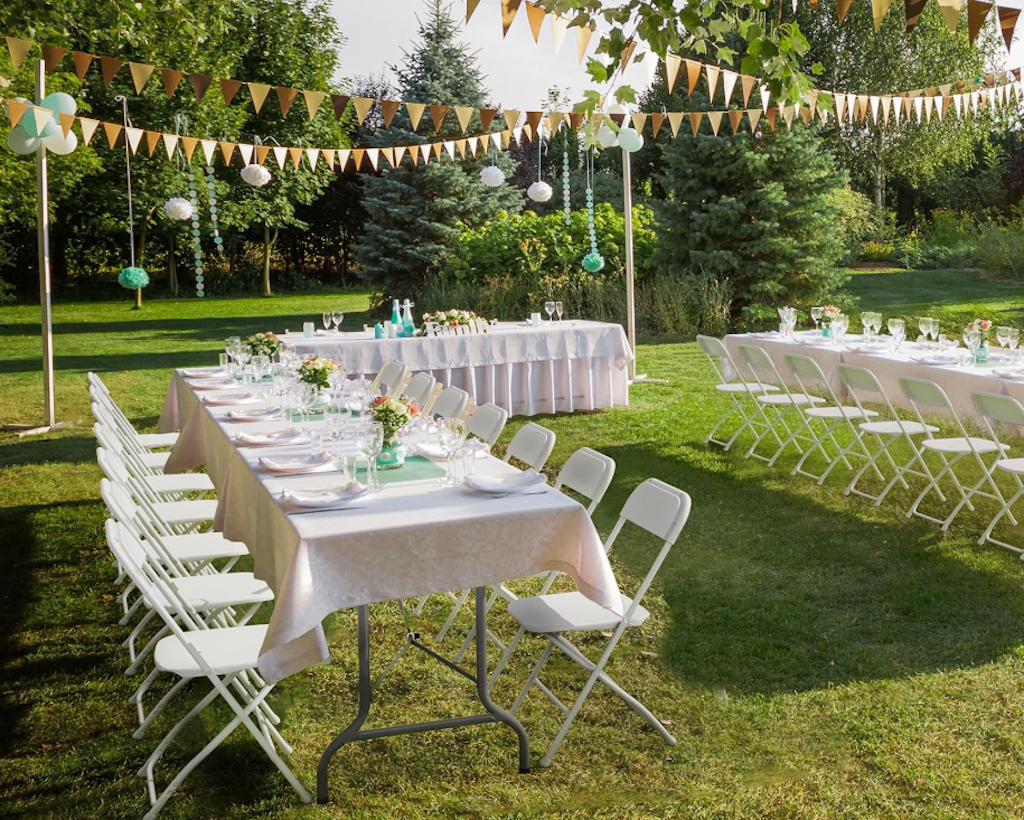
For an outdoor event, confirm that the chosen chair is suitable for the intended setting and follow any product restrictions. Inspect the ground where the chairs will actually stand. Uneven, soft or wet areas can make seating less stable and can create difficult routes for guests. A lawn that looks attractive from the house may have slopes or low spots that are not obvious until you place furniture on it.
Do not improvise supports under individual chair legs to make an unsuitable spot work. Discuss the surface and layout with the venue or rental team, and use an appropriate area. If flooring or another surface solution is needed, have it planned properly rather than treating it as a last-minute decoration. Keep guest routes clear and consider how people move between the seating, food and washrooms.
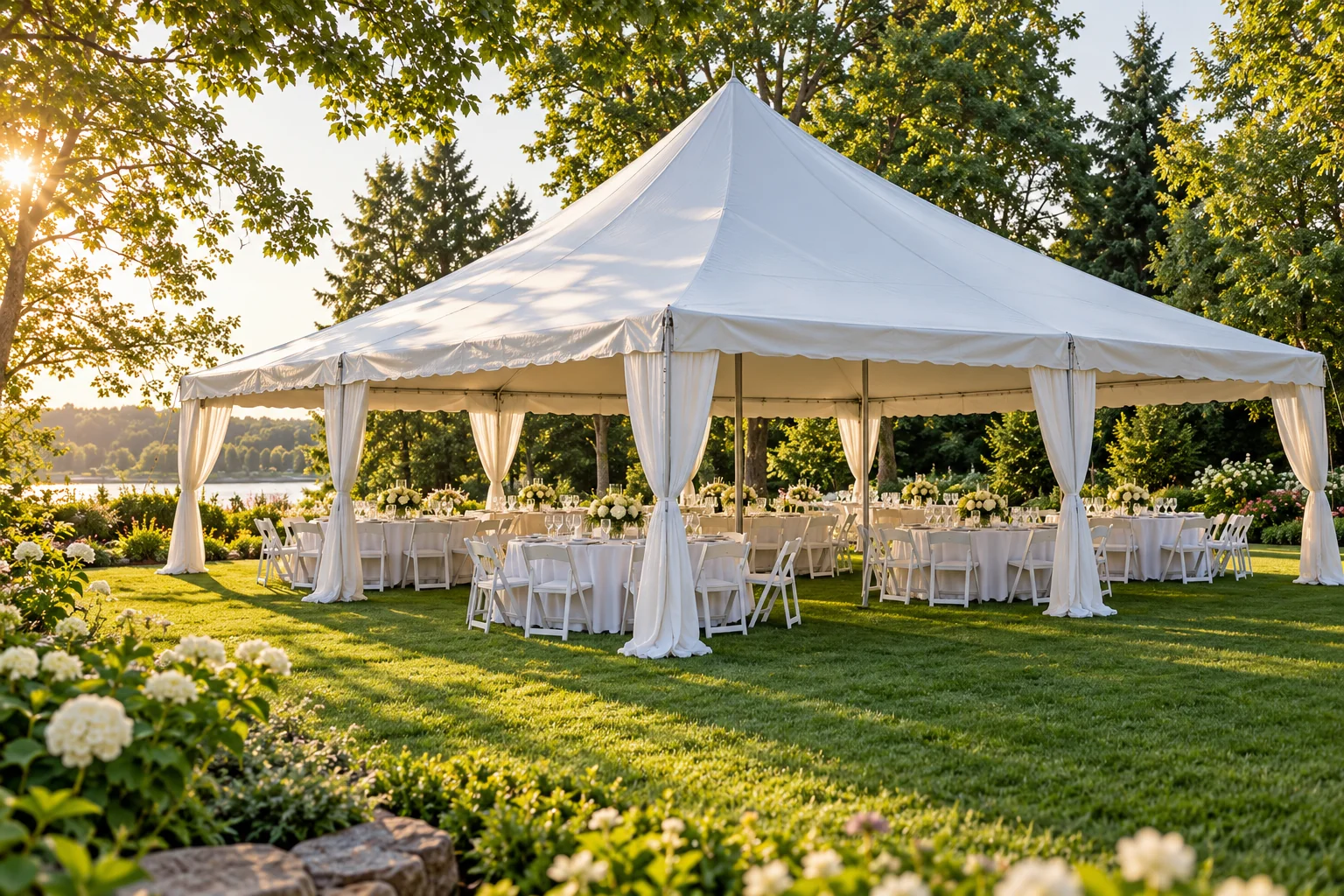
Plan for weather changes with the event lead. Chairs may need to be moved, dried or kept out of an unsuitable area according to the rental instructions and the event plan. Decide who handles those tasks and where equipment can be staged without blocking access. If the seating is under a tent, coordinate the furniture layout with the installation plan. Do not move tent components or anchors to create room for another row of chairs.
Decide whether chair covers add value
A cover can coordinate venue chairs with your linens, but it also adds a fit question and another setup task. If you are choosing rental chairs from the start, compare the complete covered-chair option with a chair you like uncovered. Include the cover, any sash, the time to dress the chairs and the work of removing the fabric afterward. The cheaper individual chair is not always the simplest complete arrangement.
Cody’s linen guidance recommends testing a cover on the intended chair before reserving it. A banquet cover, folding-chair cover and universal cover are different products. Do not assume a cover will fit because both products are described as standard. Take photographs and measurements, and ask about a sample fitting. A chair’s back shape and seat depth can matter as much as its height.
If you choose decorative chairs, consider leaving their backs visible. You can still coordinate the room through tablecloths, napkins and centrepieces. If you choose covers, test the full combination with the table rather than looking only at the chair. Keep loose fabric out of walking space and follow any indoor-only restriction on the cover itself. The chair and the textile must both suit the planned use.
Include different guest needs in the seating plan
Guests do not all use seating in the same way. Some may need a supportive option, a particular location or space for a mobility device. Ask about needs without assuming that one style will work for everyone. Confirm the actual chair specifications and any relevant limits with the supplier; do not infer a weight rating from appearance or from the material listed in the product name.
For someone using their own mobility seating, plan a suitable table position and route rather than simply adding a chair beside the table. Keep companions together where possible and consider the view of speakers or activities. If a guest needs a different chair type than the main design, treat that as part of a welcoming event rather than a visual problem. The practical experience matters more than making every seat identical.
Children’s chairs and high chairs should also be selected for their intended purpose and used according to the product instructions. An adult chair cover does not turn another seating product into a suitable child seat. Count children who need their own places, and ask the relevant adults what arrangement is appropriate. Keep special seating requirements on the setup list so they are not overlooked when volunteers are arranging rows or tables.
Work out quantities and any chair moves
Start with the number of people who need a seat at the same time. Include hosts and anyone else joining the seated activity. Then consider separate areas: ceremony, dining, presentation and quiet seating. If chairs will move between areas, map the timing and assign the people responsible. Moving a large set during a short drinks reception may conflict with photographs, food service and other setup work.
A second set can allow both areas to be ready beforehand, while one set may work when the schedule and labour support the move. Compare the arrangements honestly. Confirm whether delivery, setup and any later repositioning are included in your particular order. They are different tasks, and one should not be assumed to include the others. If you handle the chairs, follow the supplier’s instructions for transport, stacking and lifting.
Choose spare quantities deliberately and keep them separate from the guest count. A few extra chairs may help with changes, but they need an approved storage location. Do not leave stacks in doorways or circulation routes. If your guest count changes, update the table layout and linen quantities as well. An extra chair without a usable dining place does not solve a seating shortage.
Make a clear final request
Your request should identify the event date, chair style, quantity, setting and whether you prefer pickup or delivery. Add the surface, any access limitations and any planned move between ceremony and dinner. If you need a specific cushion, chair cover or different seating option for a guest, list it clearly. Ask the team to confirm availability and the final supplied configuration before considering the arrangement settled.
Before sending, compare the chair count with the seating chart. Check that the chosen chair fits the table plan, that any covers have been tested and that indoor-only items are not assigned outdoors. Confirm who will place the chairs and who will collect and prepare them for return. Keep a labelled diagram for the people setting up so a good rental choice is not undermined by an improvised arrangement.
A useful final test is to picture one guest’s full experience: arriving, finding a seat, sitting through the event, moving to food or washrooms and leaving comfortably. If the chair choice and layout support that experience, you have made a practical decision. Use the linked catalogue options to compare styles, then share your event details with Cody Party so the order can be reviewed as a complete seating plan.
Further reading & sources
Check current instructions and requirements for your event and the equipment supplied.