Start with the table, not the colour
A beautiful colour will not rescue a cloth that is too short at the ends or drags across the ground. Before looking at shades, make a table list. Record the shape, width, length where applicable, height and purpose of every table. A round dining table, a tall cocktail table and a buffet table can need different linen sizes even when their tops look similar in a photograph. Measure in inches if you are choosing from a catalogue that lists linen dimensions in inches. Keep the units consistent throughout your calculations.
If you are renting the tables from Cody Party, use the dimensions in the specific product description. For example, Table Round - 60" Wide X 30" High is a different starting point from a 72-inch round table. If the venue supplies tables, ask for measurements rather than accepting “standard banquet tables” as a size. Ask whether all tables match; venues sometimes have a mixture. For tables at home, include any leaves that will be installed during the event. Measure the finished setup, not the smaller everyday configuration.
Put this information in a simple worksheet before requesting linen. It reduces back-and-forth and lets you make a colour decision knowing the size is suitable. A quick photograph of the table and its legs can also help explain an unusual shape or obstruction.
Understand what linen drop means
Drop is the distance a tablecloth hangs below the edge of the tabletop. A short drop creates a casual look and exposes the legs. A longer drop conceals more of the base. A floor-length cloth is usually chosen to reach approximately the floor when centred on the intended table. These are style descriptions, not guarantees that a particular cloth will behave identically on every table. The actual table height, fabric, seams and how the linen is centred all affect the finished appearance.
Think about use as well as appearance. Guests need to move chairs and place their feet comfortably. People using mobility devices need appropriate access beneath the tabletop; fabric should not hide a structural obstruction or become an obstacle. At a buffet, the front may benefit from a longer finish while staff still need a practical service side. Outdoors, a cloth that pools on grass is likely to collect moisture and dirt, and a trailing corner can enter a walking route.
Choose a target drop in inches rather than asking only for “long.” For example, saying you want about 15 inches of drop on a 60-inch round table is much clearer than saying semi-formal. If you are uncertain, compare a short and long option on an actual table before deciding on the whole order.
Calculate a round tablecloth size
For a round table, use this calculation: cloth diameter equals table diameter plus twice the desired drop. You add the drop twice because the linen hangs over both sides. To check a cloth you already have in mind, reverse the calculation: subtract the table diameter from the cloth diameter, then divide by two. This gives the theoretical drop when the cloth is centred evenly.
A 60-inch round table with a 15-inch drop needs a 90-inch round cloth: 60 plus 15 plus 15 equals 90. A 60-inch round table with a 30-inch drop needs a 120-inch round cloth. On a table 30 inches high, that is the mathematical floor-length combination. The catalogue includes 120" Round Tablecloth White - Poly, which is a useful starting point for that second arrangement. A 90-inch cloth on the same table gives a very different finish despite covering the same top.
Now compare a 72-inch round table. A 120-inch cloth produces a 24-inch drop, because 120 minus 72 equals 48, divided by two. A 132-inch cloth produces a 30-inch drop. Do not transfer the linen size from a 60-inch table to a 72-inch table and expect identical coverage. Draw one side of the table if the arithmetic feels abstract; seeing the extra fabric on both edges usually makes the choice straightforward.
Calculate rectangular linen in two directions
Rectangular tables require two calculations. Linen width equals table width plus twice the desired side drop. Linen length equals table length plus twice the desired end drop. The side and end drops do not have to match, but you should know when they differ. A cloth can reach the floor at the ends while leaving much shorter sides, which is why a size that sounds generously long may still look unexpected.
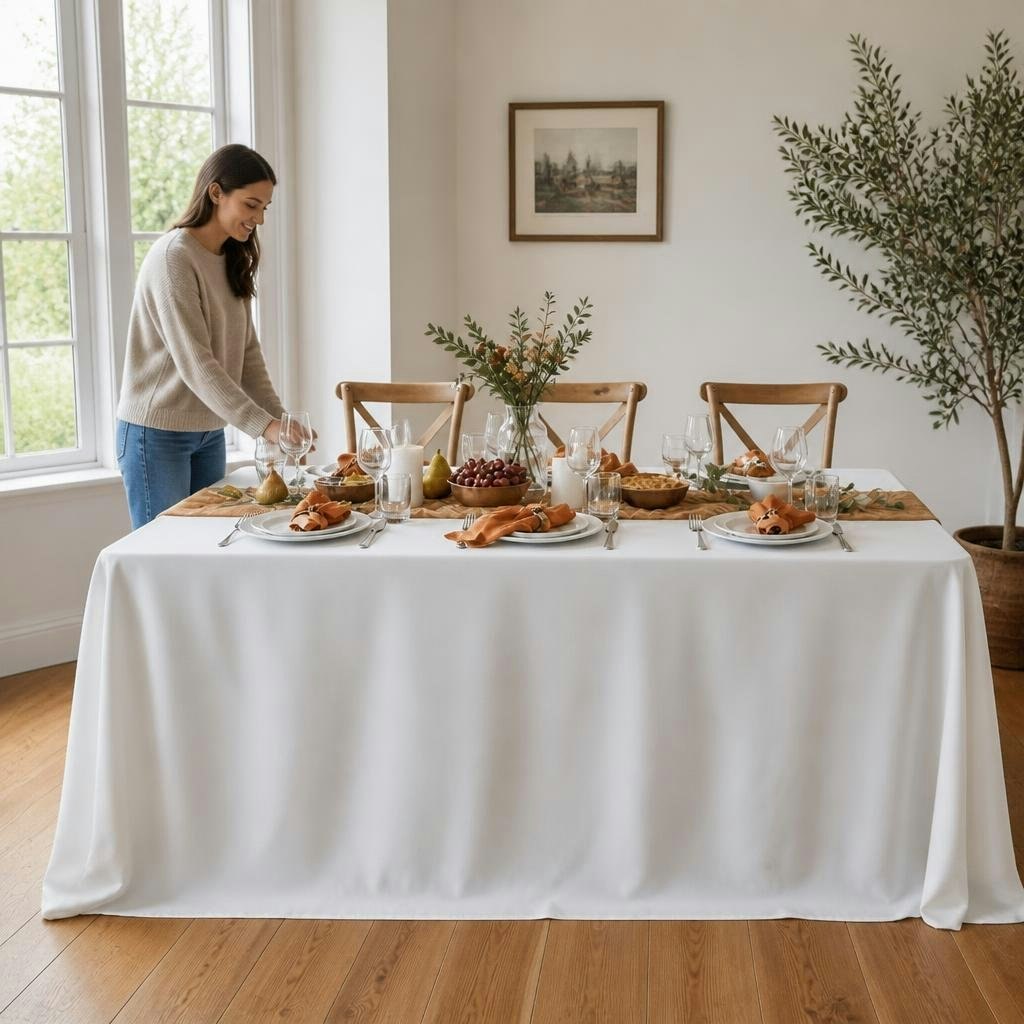
A six-foot table is 72 inches long. For a tabletop 72 inches long and 30 inches wide, at a height of 30 inches, a 90-by-132-inch cloth gives a 30-inch drop in both directions. Across the width, 90 minus 30 equals 60; half is 30. Along the length, 132 minus 72 equals 60; half is also 30. The Rectangle White Tablecloth (90x132") - Poly is that size in the white polyester range. Check the specific table dimensions before pairing them.
An eight-foot table is 96 inches long. On a 96-by-30-inch top, a 90-by-156-inch cloth provides the same theoretical 30-inch drop on all sides. That is why Rectangle White Tablecloth (90x156") - Poly is a different item, not an interchangeable version of the six-foot option. A 50-by-120-inch cloth on the six-foot table gives 10-inch side drops and 24-inch end drops. It may suit a casual service table, provided you want that unequal finish.
Plan cocktail and specialty tables separately
Cocktail tables are easy to overlook because their tops are small. Their height changes the linen calculation considerably. Measure the diameter and the height of the particular table you select. Do not assume a low occasional table and a standing-height table use the same cloth. If the tabletop is 32 inches across and the table is 42 inches tall, a cloth would need a theoretical diameter of 116 inches to reach the floor evenly. A nearby rental size may therefore hang a little longer or shorter.
A tied or gathered cocktail-table look is another consideration. Gathering fabric changes how it falls, so the simple diameter calculation is only the starting point. Show the rental team a reference photograph and ask which available combination suits the actual table. Avoid assuming a ribbon, tie, sash or fitted cover is included with a tablecloth. Each item should be identified on the request if you want it supplied.
Children’s tables, square tables and unusually narrow serving tables also deserve separate lines in your worksheet. Their heights or proportions can create surplus fabric with a standard banquet cloth. If you combine tables into a larger arrangement, confirm whether each table will have its own linen or whether a larger cloth is intended to cover the whole group. Measure the combined shape and consider seams, gaps and access before choosing.
Decide which tables need a special finish
Not every table needs the same treatment. Guest dining tables usually benefit from a consistent look, while a gift table, cake table or display table can be a deliberate focal point. Begin with one main linen style, then decide where an accent would make the biggest difference. This approach is often easier to coordinate than choosing a different fabric for every station. It also makes the rental list clearer for whoever is setting up.
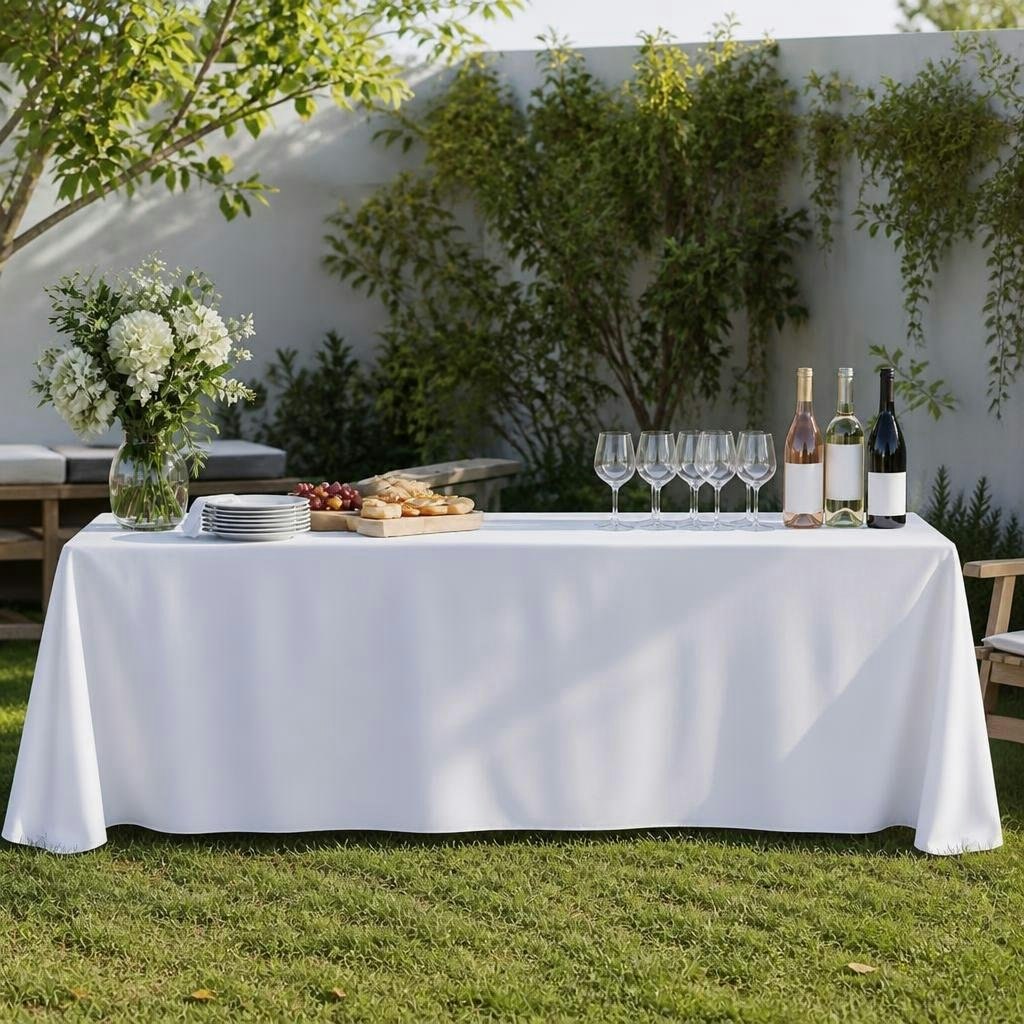
For a buffet, think about the equipment that will sit on the table. Tablecloths are decorative textiles, not heat barriers. Follow the equipment instructions and the venue’s requirements for hot appliances, chafing dishes and any permitted fuel. Do not place a hot surface directly against linen because the fabric happens to cover the table. Keep cloth edges away from equipment controls and from areas where staff will carry trays.
For a cake or dessert display, check the table’s stability and whether the cloth reaches a high-traffic route. For registration, leave enough workable space for paperwork and bags without hiding table edges. A long cloth can conceal storage, but storage beneath a table should not obstruct seated guests or accessible routes. Give every service table a name on your list so it is not confused with the dining-table count.
Choose colour and texture in the actual setting
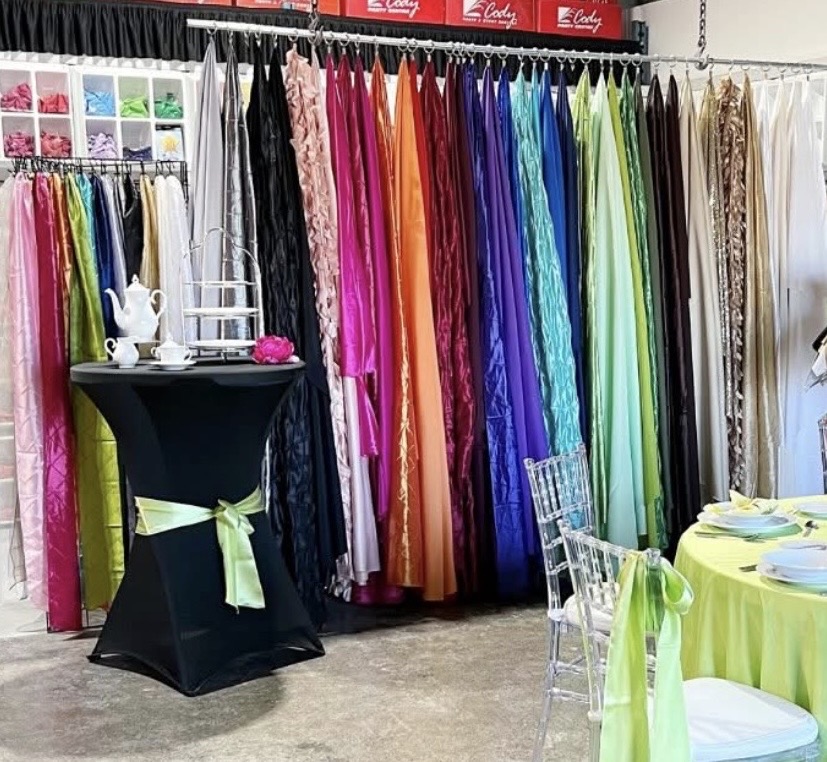
Once the sizes are established, look at colour with the venue in mind. Wall colour, flooring, natural light and evening lighting can change how a fabric appears. A phone image is useful for inspiration but is not a reliable colour sample. White, ivory, champagne and blush can look similar on a screen and noticeably different beside each other. If an exact match matters, discuss it before ordering rather than assuming two product names describe identical shades.
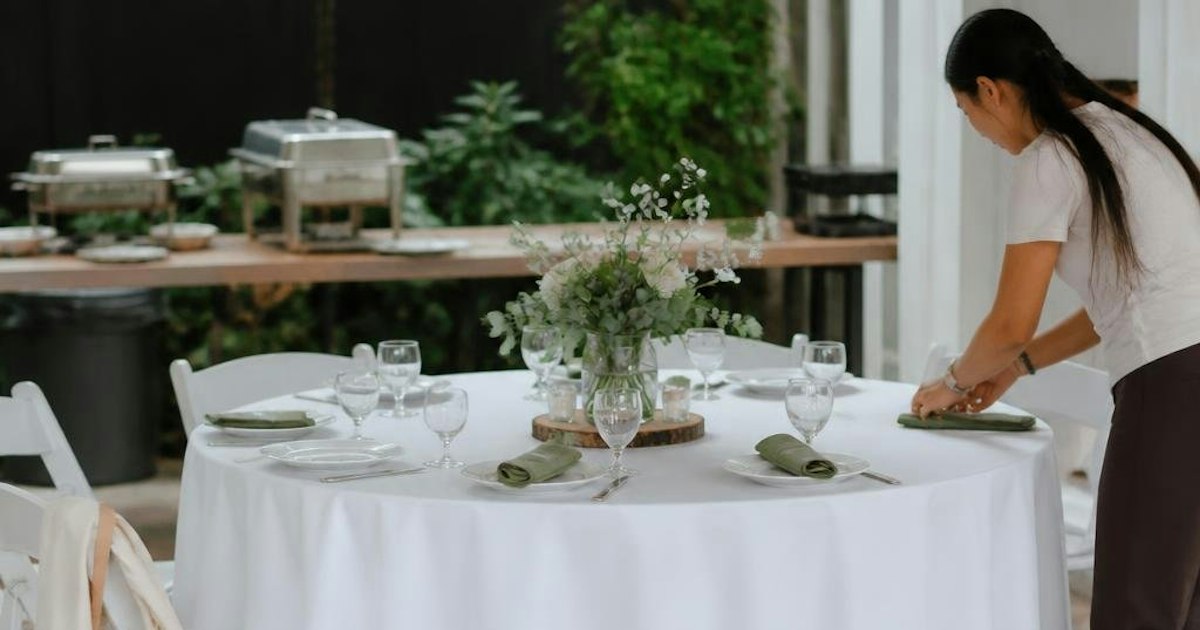
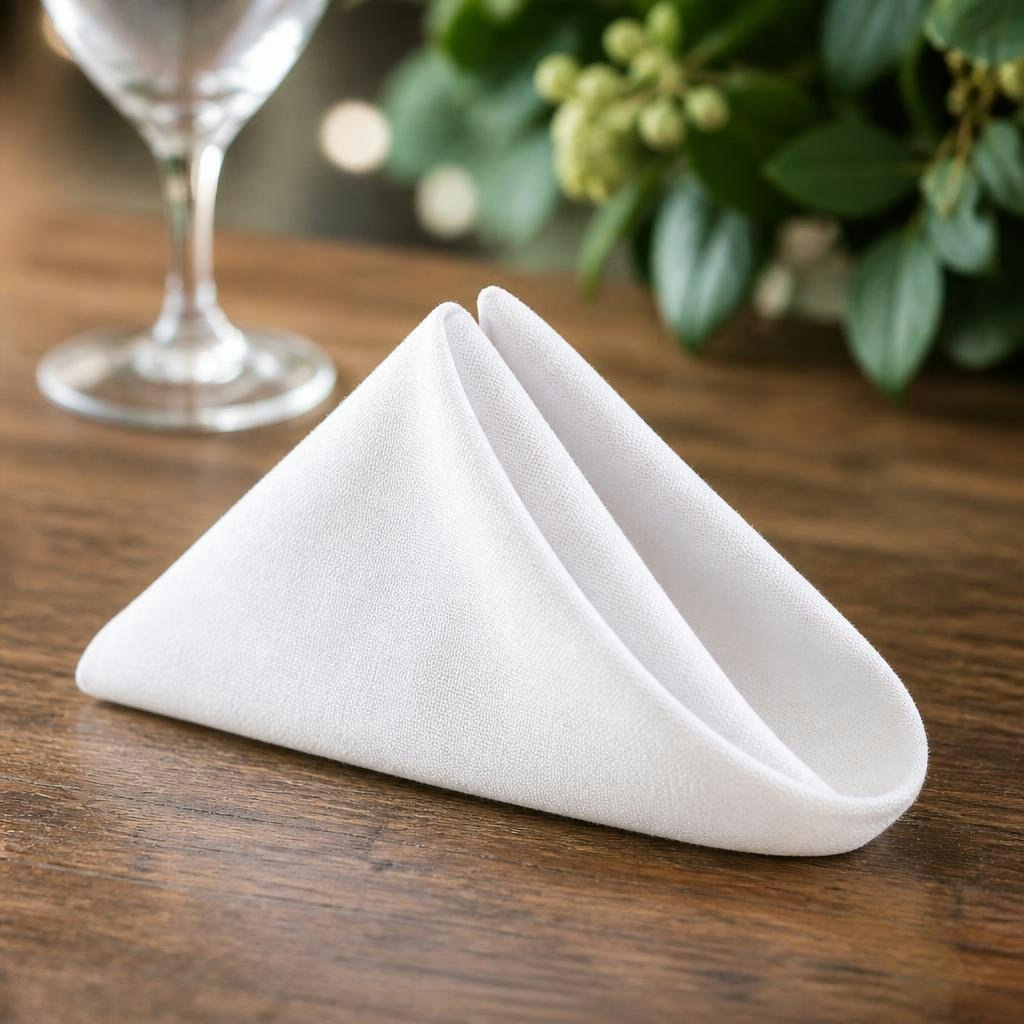
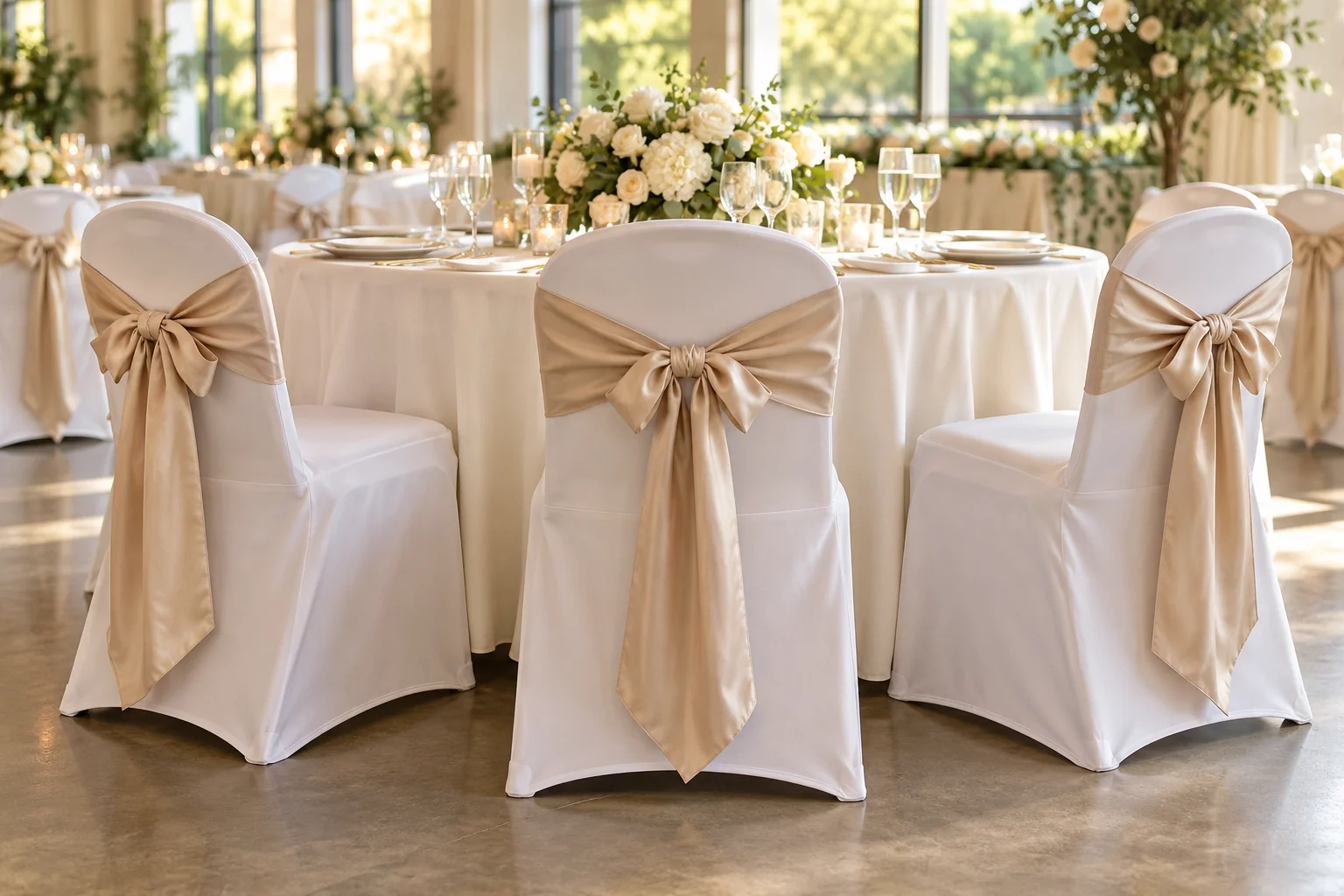
Start with the largest surfaces: tablecloths and chair covers, if you are using them. Then add napkins and any sashes or decorative pieces. A small contrasting accent can be more effective than using a strong colour everywhere. White Napkins (20x20") can be a simple neutral choice with a coloured tablecloth, while a coloured napkin can bring interest to a white table. Consider whether the napkin will be folded on the plate, beside the cutlery or in a glass; that changes how much colour is visible.
Cody’s linen information notes that rental linen colours can vary between pieces and manufacturing runs. That is a practical reason to ask about close matching for a wedding or a tightly controlled brand palette. Bring your centrepiece, invitation or a physical colour reference when comparing options, and judge the entire place setting together.
Build a complete linen quantity list
Count by table type and function rather than by guest count alone. Suppose a dinner uses eight round guest tables, two rectangular buffet tables, one dessert table and one welcome table. That is twelve tablecloths before considering any cocktail tables or a head table. The eight dining tables may all use one size, while the four service tables need two or more sizes. A single line reading “twelve white linens” leaves too much room for error.
For napkins, count the people who will use one at the meal, including any hosts, children or service providers who are included in the seated food plan. Decide whether the same napkin stays with the guest or whether another meal or service needs a fresh set. Add a modest, deliberate spare quantity if it suits your event, and identify it separately. Extras are a planning choice, not an automatic requirement or a promise of free unused returns.
Use columns for table name, quantity, table dimensions, cloth dimensions, colour and fabric. Add the desired drop so a change of table model can be spotted before the order is finalized. Keep a copy for the setup team. Confirm availability, final quantities and the applicable rental terms with Cody Party; an online request is the start of that conversation, not proof that every colour and size is reserved.
Set up and handle the linen thoughtfully
Give the setup team enough time to identify sizes before placing centrepieces and tableware. Unfold and centre the cloth first, check the drop on opposite sides, then add the rest of the setting. It is much harder to reposition a cloth once glasses and plates cover the tabletop. Put the table name or location on your setup worksheet so volunteers do not use the longer buffet cloths on shorter guest tables by mistake.
Keep clean linen away from damp floors, soil and unpacked food. If a cloth looks wrong, recheck the table dimensions and the label before assuming the item is incorrect. A rectangular cloth turned ninety degrees can create an uneven result, and a round cloth placed off-centre can appear too short on one side. Do not cut, pin, tape or modify rental fabrics without checking what is permitted.
Plan the end of the event too. Cody’s published linen guidance asks customers to remove food debris, let damp linen air-dry before packing and avoid laundering the rental linen themselves. Follow the instructions supplied with your order, use the provided return packaging, and contact the team if drying time conflicts with the return schedule. Keeping wet cloths separate while you organize the return helps prevent an avoidable problem from affecting the rest of the linens.
Check the request before you send it
Review the order against the room plan one final time. Do the table quantities match the number of tablecloths? Are all sizes written in the same unit? Have you included the buffet, cake, gift, welcome and cocktail tables? Are the round cloths matched to the correct diameter, and have rectangular side and end drops both been calculated? These checks are quicker than trying to solve a missing-linen problem once guests are arriving.
For an easy example, imagine you choose eight 60-inch round tables with floor-length white cloths and two six-foot buffet tables with the same finish. Your starting list is eight 120-inch round cloths and two 90-by-132-inch rectangular cloths, assuming every table is 30 inches high. Add any separate dessert or welcome table, then calculate napkins from the meal plan. State those assumptions in the request so they can be confirmed.
If your preferred size is unavailable, ask about alternatives before switching to the nearest number. A different table size, shorter drop or different fabric may solve the problem cleanly. The best linen order is one where the measurements, appearance and practical use all agree. Start with the linked rental items, add your event date and quantities, and tell the team which table dimensions and drop you are aiming for.
Further reading & sources
Check current instructions and requirements for your event and the equipment supplied.